By Roger and Marcia Eaton, grandson*
*Relation to Andy and/or Flora Lehr
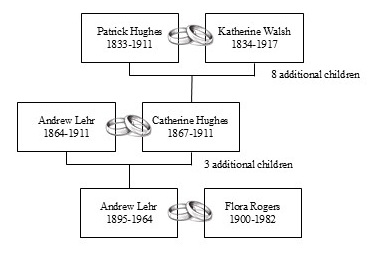
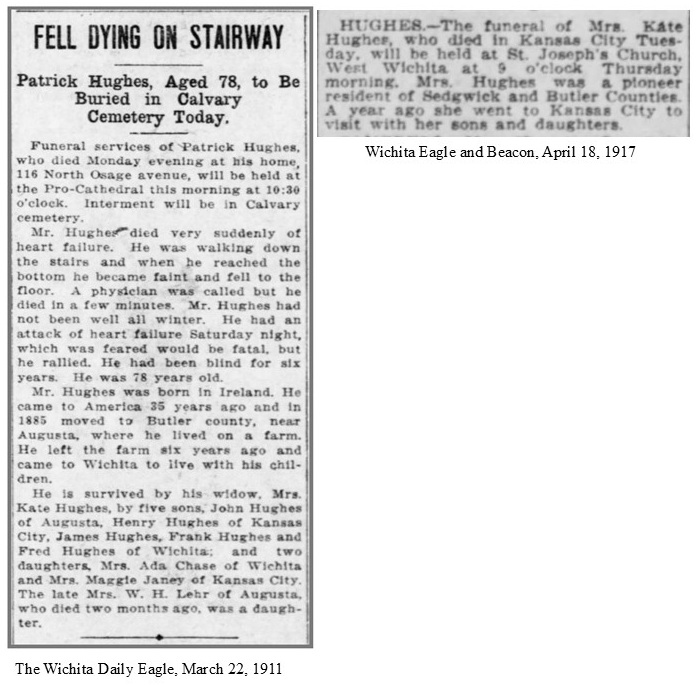
Andy Lehr’s grandparents were Patrick and Katherine (Walsh) Hughes. Both were born in Ireland.
In the past, Irish families didn’t celebrate birthdays as we do in the United States today. Many of them didn’t know the exact day. After an extensive search of church and county records, we were not able to find any information on Patrick’s birthday. His birth year is consistent in other forms of documentation; 1833. The location is listed as Dublin, County Wicklow, Ireland.
The 1910 census (USA) indicates that he was married to Katherine Walsh for fifty years. That would put their wedding in 1860. Katherine was also born in Ireland. Her birth year was 1834. Comparing the birth year to the estimated wedding year makes Katherine 26 when they were married. Our Irish ancestors’ recordkeeping efforts were not as thorough as our German ancestors.
Patrick and Katherine with their young family crossed the Atlantic Ocean to seek a new life in the United States of America in 1874 or 1875. One child remained in Ireland. The typical route to the US was: Dublin, Ireland to Liverpool, England, then to New York, USA. Passenger records for ships leaving Liverpool were not required and thus no records exist. Ellis Island, the entry point for immigrants entering through New York, was not opened until 1892. According to the 1910 census, Patrick became a citizen in 1876. Birth dates of their children are a confusing web of conflicting information. Headstones, church records and recollections are often inconsistent.
We utilized the Ancestry DNA database to confirm that we researched the correct Patrick Hughes and Katherine (Walsh) Hughes. Roger matched sixteen descendants of both.
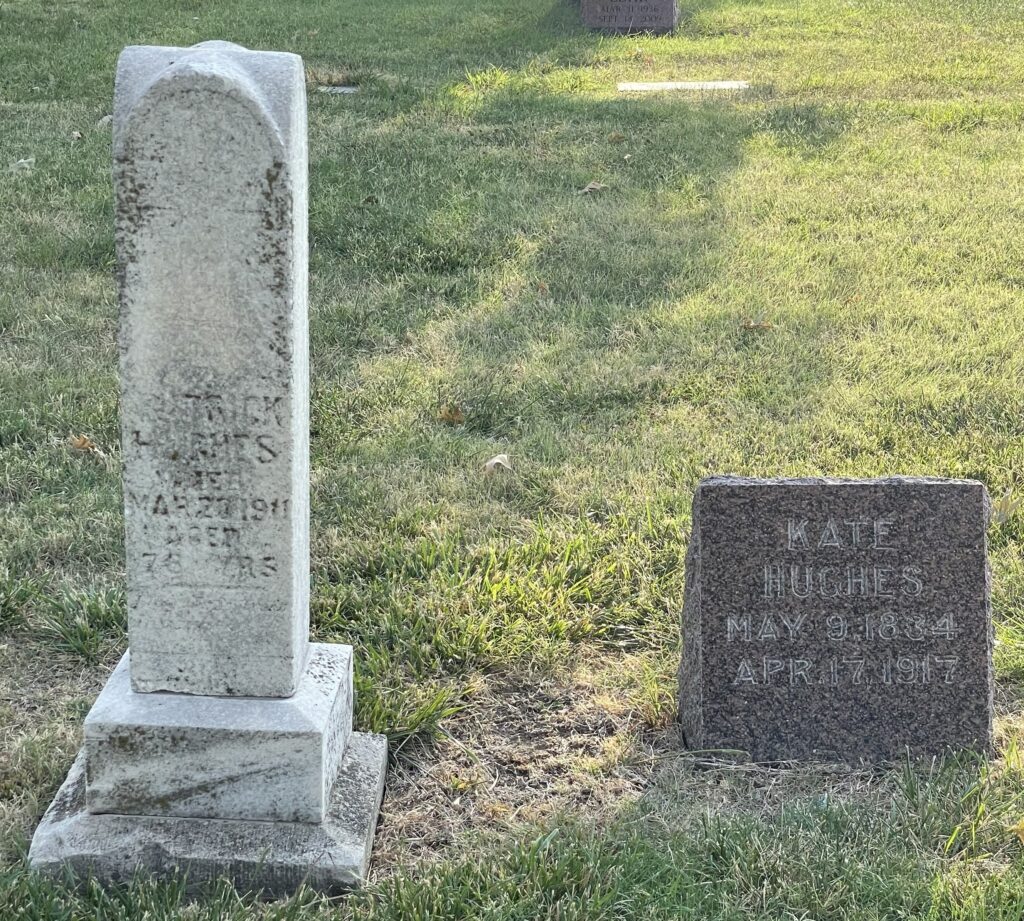
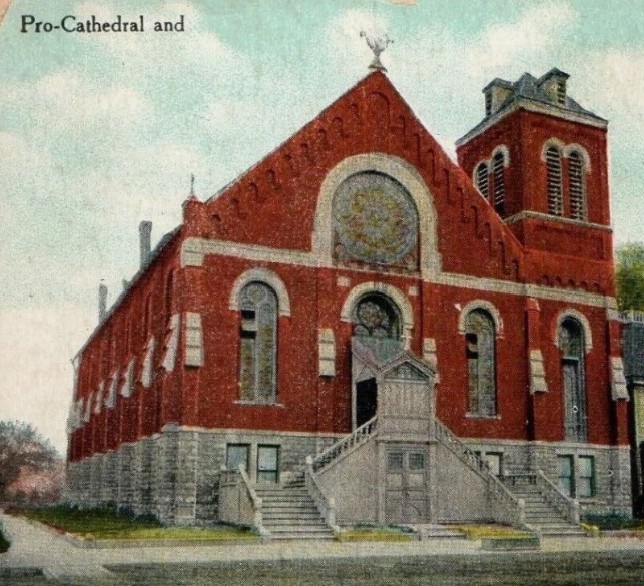
Records indicate that they settled in Camp Point, Illinois, then Hancock County, Illinois. In 1885, They moved to Pleasant (township), Butler County, Kansas. It is near Rose Hill and close to east Wichita. Patrick and Katherine relocated to Goddard, Kansas. It is just west of Wichita. Their final residence, together, was in Wichita. Patrick died in March 1911. Katherine moved to Kansas City, Missouri in 1917 where she died in April.
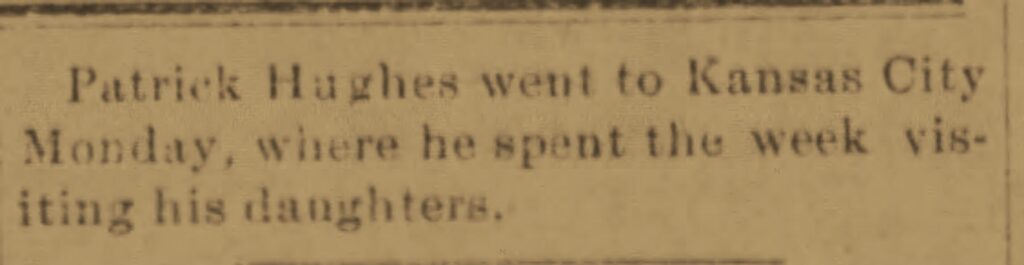
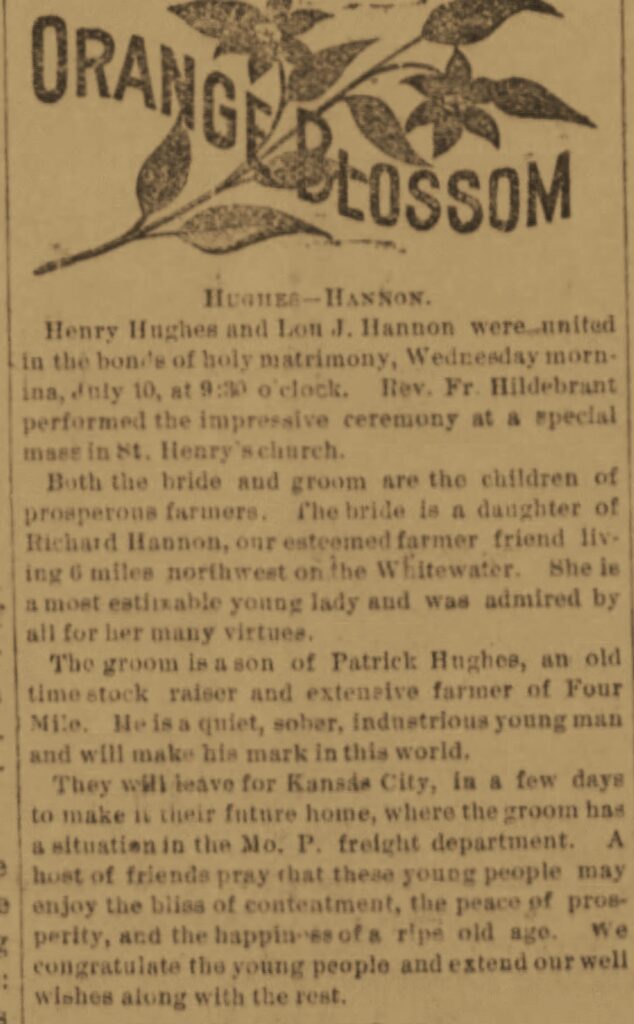

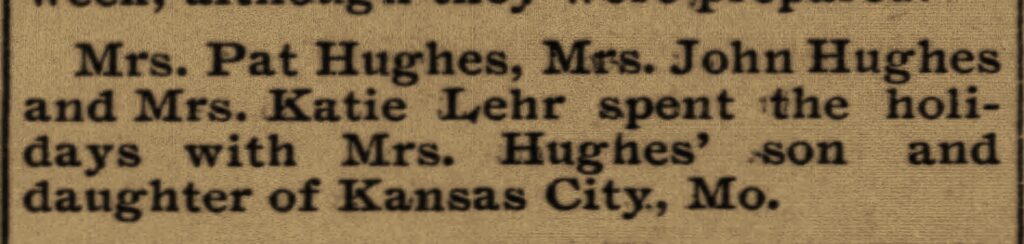

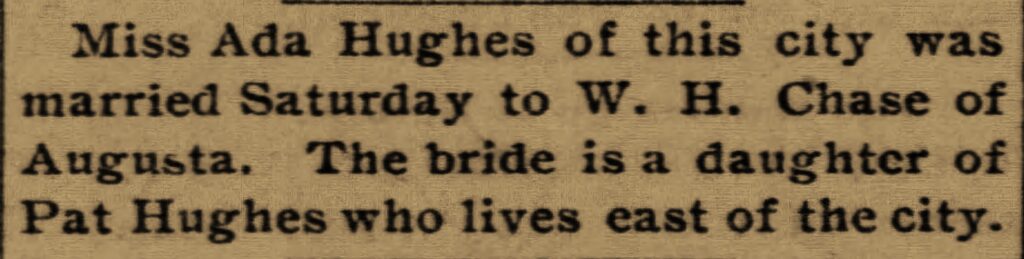
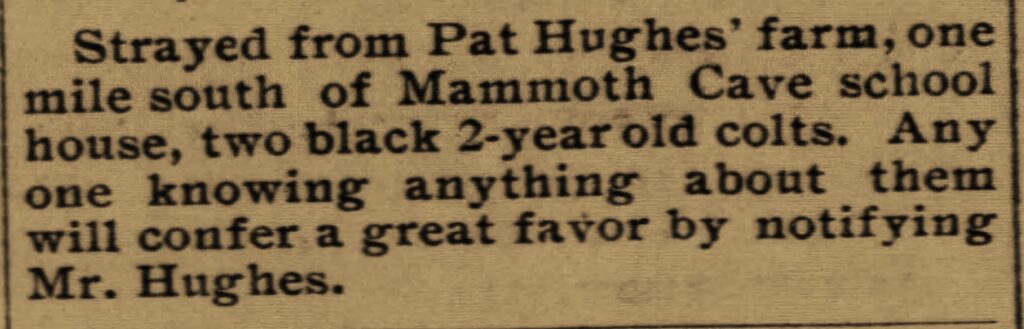
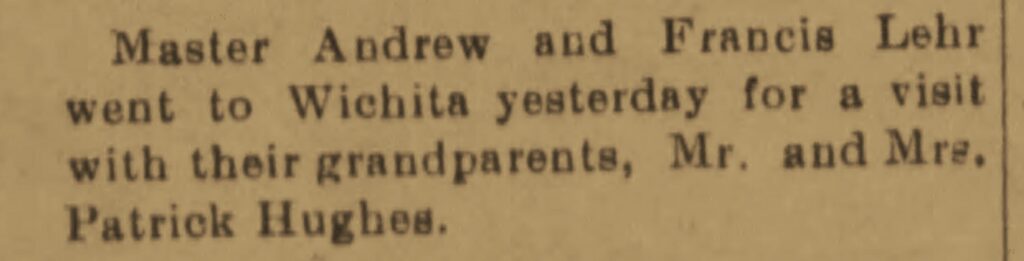
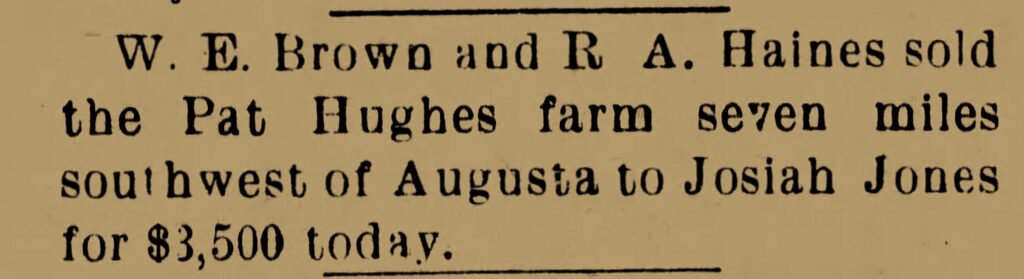
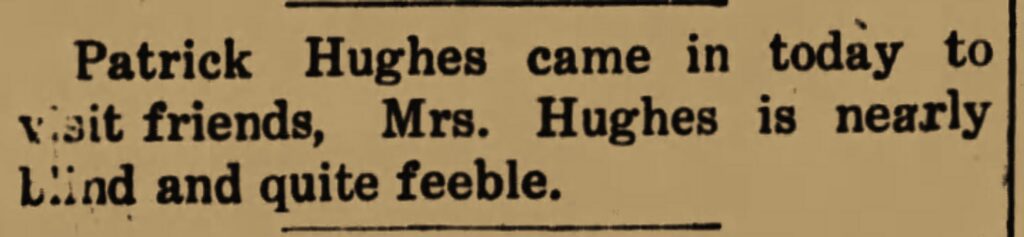
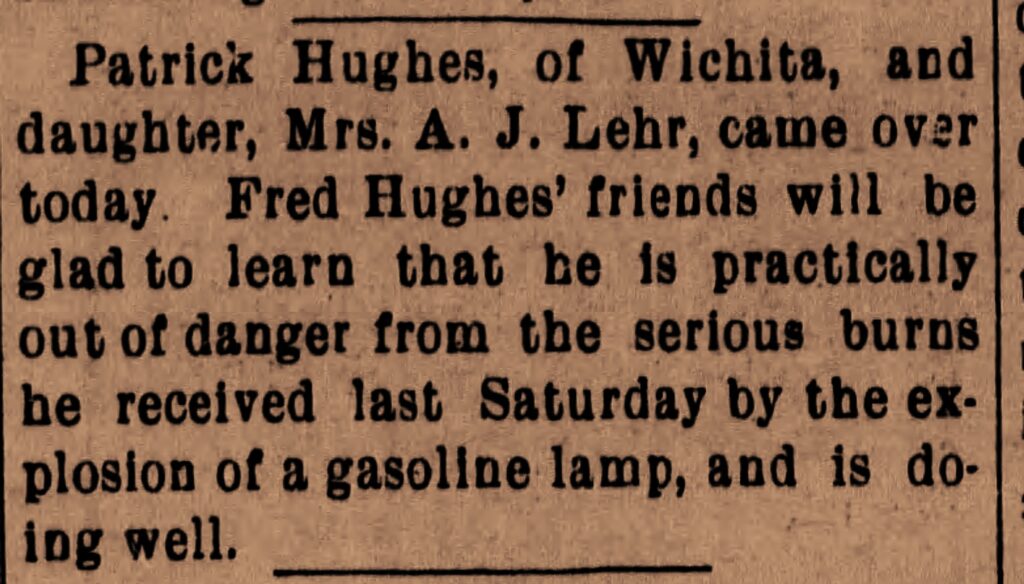
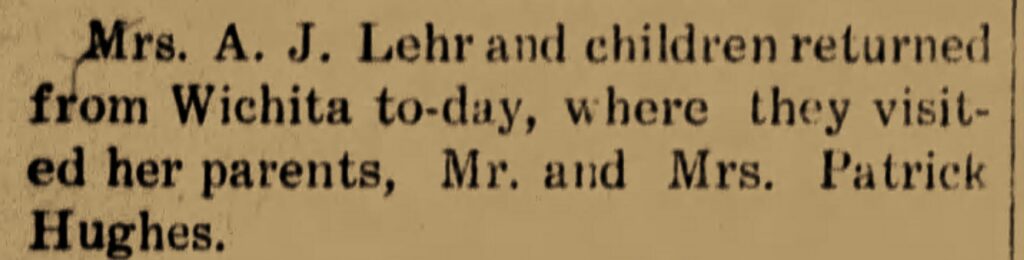
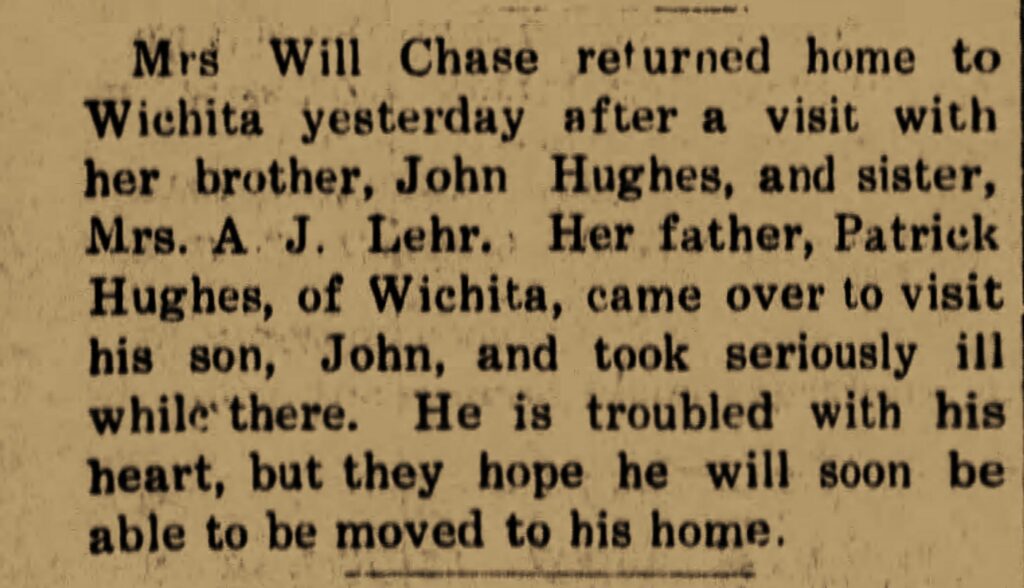
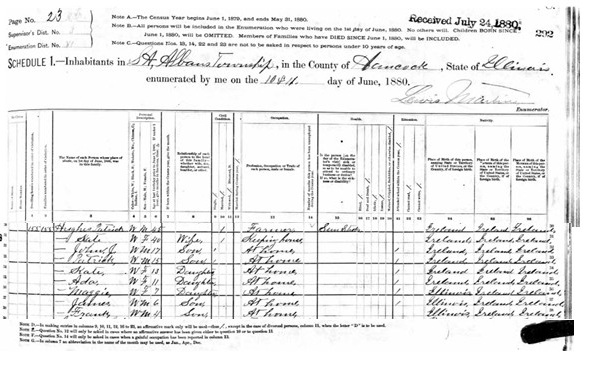
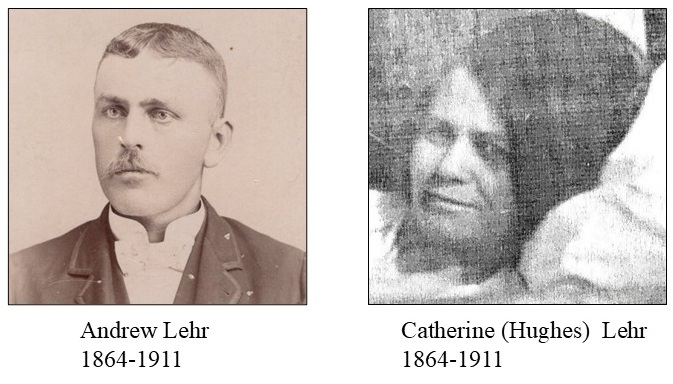
Patrick and Catherine’s first daughter married Andrew Lehr, they were Andy Lehr’s parents. Both died of Pneumonia in January 1911. Patrick was deeply affected by their untimely deaths. He passed\ away three months later.
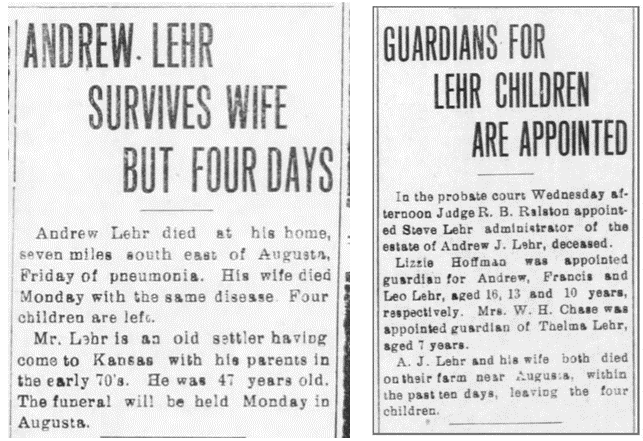
After losing his parents and paternal grandfather within the first three months of 1911, sixteen-year-old Andy was sent to live with his maternal aunt, Elizabeth (Miers) Laner Hoffman. She was fondly known as Aunt Lizzy.
Irish Naming Convention
| Excerpt from English Ancestors Blog https://englishancestors.blog/2020/03/21/traditional-irish-naming-patterns/ So for any of you with Irish ancestry from before about 1850, you’ll know that we have to think laterally and draw upon any clue we possibly can. One such clue could be the traditional naming pattern, which was widely used in Ireland across all sections of the community until the late 19th century. It goes like this: 1st son named after paternal grandfather (patGF) 2nd son named after maternal grandfather (matGF) 3rd son named after father (F) 4th son named after father’s eldest brother (patB) 5th son named after mother’s eldest brother (matB) For girls the same system applied, but it was not always followed as rigorously: 1st daughter named after maternal grandmother (matGM) 2nd daughter named after paternal grandmother (patGM) 3rd daughter named after mother (M) 4th daughter named after mother’s eldest sister (matS) 5th daughter named after father’s eldest sister (patS) For both girls and boys, sometimes the order in which grandparents were honoured could be switched, i.e. maternal first or paternal first. |
Hughes Tartan
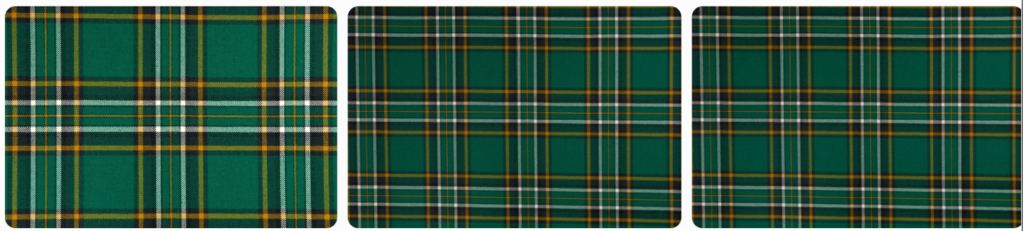
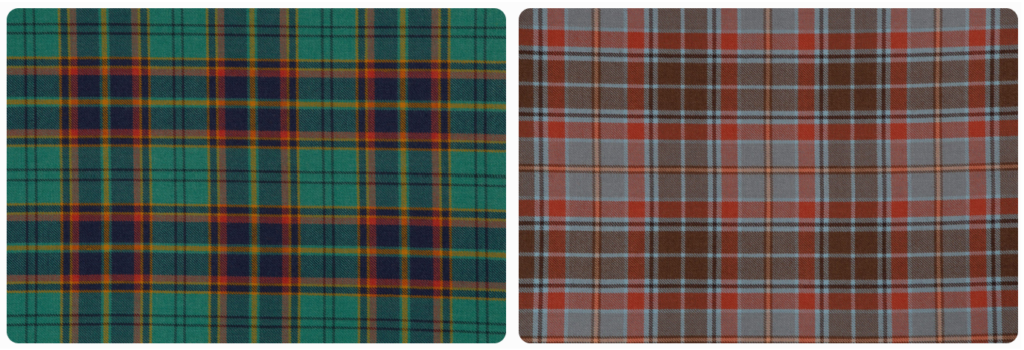
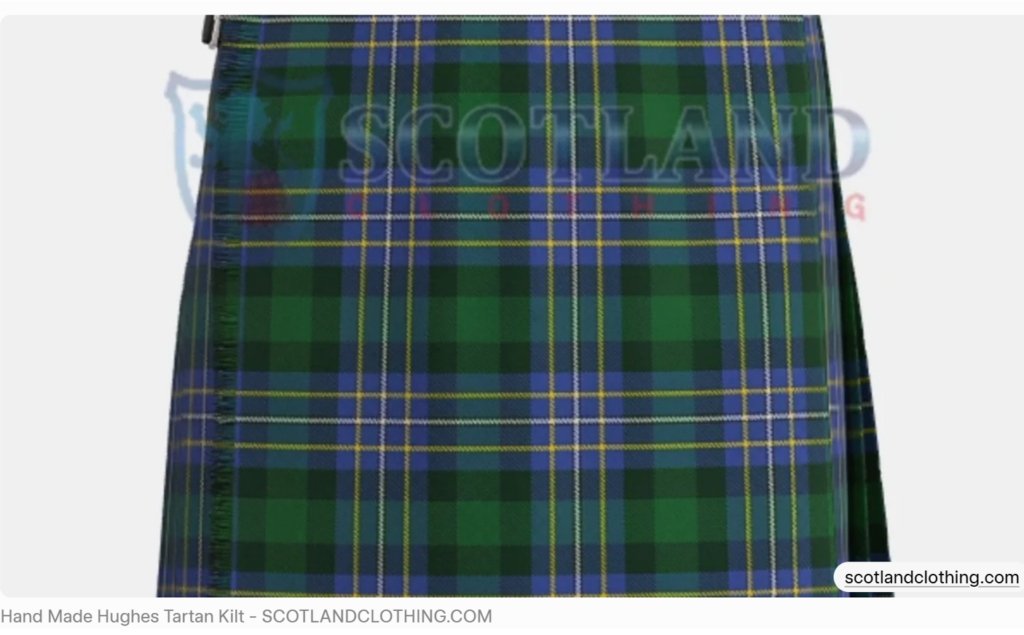
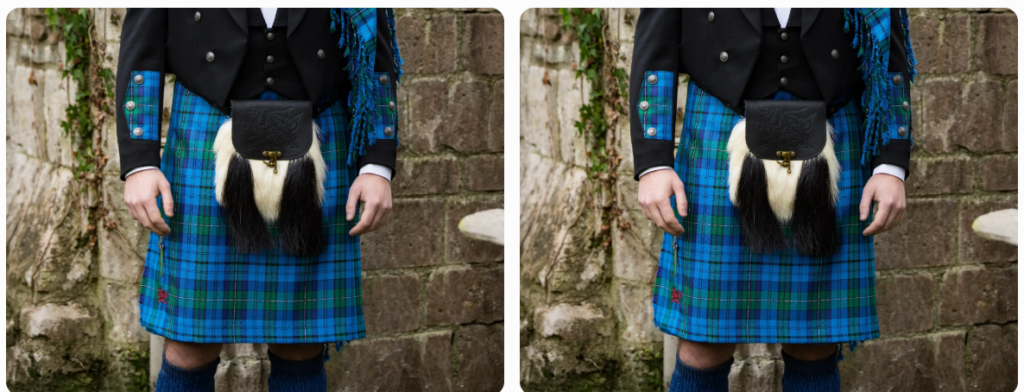
| Provided by Grok AI Irish **family tartans** (also called name or clan tartans in an Irish context) are a modern development, largely from the late 20th century onward, unlike the long-standing tradition of Scottish clan tartans. Tartans originated primarily in Scotland as patterned wool fabrics used in highland dress, with specific designs later associated with clans, families, regions, or regiments—mostly formalized in the 19th century or later. In Ireland, tartan use was historically limited. There is evidence of tartan-like woven cloth in Ireland (e.g., the 16th-century Dungiven costume find in Northern Ireland, possibly linked to Scottish-influenced gallowglass mercenaries), but tartan never became a core part of traditional Irish dress the way it did in Scotland. Instead, Irish cultural attire leaned toward plain saffron-dyed léine (tunics), mantles, or solid colors like green, blue, or saffron. Modern Irish tartans emerged prominently in the **1990s** and beyond, driven by cultural revival, tourism, and kilt makers. The first wave focused on the **32 historic Irish counties** (e.g., Antrim, Galway, Dublin), with each county assigned a unique tartan pattern symbolizing local heritage, landscapes, or history. These are the most established and widely recognized “official” Irish tartans. Later, additional designs appeared for Irish **provinces** (e.g., Ulster, Leinster, Munster, Connaught) and, more recently, for specific **family names** or surnames. These family tartans are not ancient or historically documented for Irish clans/septs (as Irish “clans” — from Gaelic “clann” meaning family — did not traditionally use distinguishing tartans). Instead, they are contemporary creations, often marketed for people of Irish descent to celebrate heritage, similar to how Scottish family tartans work. Popular examples include tartans for surnames like O’Neill, Kelly, Maguire, Lynch, or Doyle. There are now dozens of such family-linked Irish tartans available from kilt shops and heritage sites. Many people with Irish roots also wear the **Irish National Tartan** (a general design featuring prominent green, with accents of gold/yellow, black, white, and sometimes other colors, symbolizing Ireland’s landscapes, Celtic heritage, and national pride) when no specific county or family tartan applies. Figure 1 (below) (Examples of the Irish National Tartan above, showing its characteristic green base with yellow/gold, black, and white lines.) County tartans often vary in style but commonly incorporate greens, blues, and earthy tones. Figure 2 (below) (Examples of Irish county tartans, featuring varied green, blue, red, and brown patterns.) ### Focus on the Hughes Tartan The surname **Hughes** (often of Irish origin as an Anglicized form of Mac Aodha or Ó hAodha, meaning “son of Aodh/fire,” or sometimes Welsh/English) does not have a single, universally “official” Irish family tartan with deep historical roots. Irish family tartans for Hughes are modern and commercial, with some products pairing the Hughes coat of arms with the Irish National Tartan background rather than a unique sett. Figure 3 (below) (Example of a Hughes-associated tartan kilt in a blue-green pattern.) A more commonly referenced **Hughes tartan** is the Welsh-origin one (as the name Hughes is patronymic from Hugh, prominent in Wales). It is registered (e.g., in tartan databases) as a clan/family design, predominantly **blue** with accents of **red, purple, green, and black**. It features variations like ancient (muted tones), modern (bolder), weathered, hunting, or dress (with white added). Figure 4 (below) (Examples of Hughes/Pugh or Hughes of Wales tartan in use, showing dominant blue with green, black, and other lines.) Some sources list a Hughes family tartan from 1998 (associated with a specific Hughes family in Scotland), but it lacks widespread adoption as distinctly Irish. In practice, people with Irish Hughes ancestry might choose: – The Irish National Tartan for general pride. – A county tartan if tied to a specific Irish origin (e.g., Ulster counties where Hughes/MacHugh names appear). – The Welsh Hughes design, given overlapping Celtic influences. Overall, Irish family tartans like any potential Hughes one are about modern cultural expression and identity rather than ancient tradition. If you’re connected to a specific region or branch of the Hughes family, checking heritage sites or kilt specialists can help find the closest match! |
Wicklow County Tartan
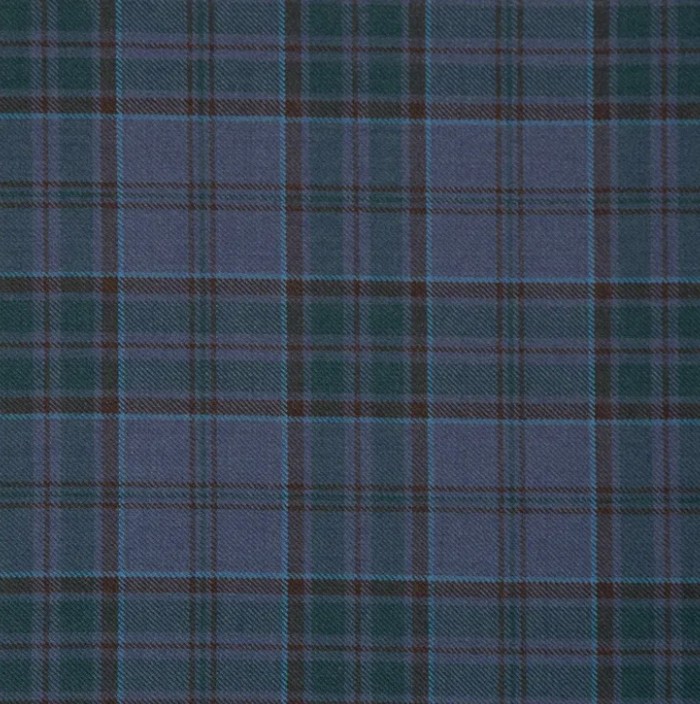
| Patrick was born in Wicklow County, Ireland. Below is an excerpt from the Welsh Tartan website. https://welsh-tartan.com/tartans/wicklow-irish-county/ Just one of the many Irish County tartans designed in 1996 to celebrate the history and culture of this beautiful county. While a few Irish family/clan tartans do exist, the Irish County tartans were introduced to allow tartan lovers worldwide to celebrate their Irish heritage by wearing a County tartan they resonate with most. Wicklow Irish County is a universal tartan, which means it is not associated with any specific clan or family and can be worn by anyone! |
FOREWORD TO THE HUGHES FAMILY HISTORY
By Cecelia Hughes Butler
This is a history of the Hughes Family, as narrated by Cecelia Rose Hughes Butler in the year 2012, at the age of 93.
In the 1870’s, Patrick and Katherine Hughes came to America with six children, leaving one behind as she had a job. They settled in Illinois, where they had my dad, James William, and two more children.
They later moved to Wichita Kansas, and Dad married Viola Kirby and they had five children – Celeste, Loretta, Pauline, James (Poosie), and Cecelia. This is my story of growing up with my siblings.
Signed, Cecelia R. Butler, 2012
The Hughes Family In the 1870’s, Patrick Henry Hughes (1833 – 1911) and Katherine Welsh Hughes (1834 – 1917) left outside Dublin Ireland, came to America, and settled in Camp Point, Illinois With children (1) John Joseph (12/24/1864 – 1926) (2) Henry (1865 – 1919) (3) Patrick (1865) (May be the same as above) from (4) Mary Catherine (4/15/1866) (Kate) (5) Bridget or Ada Jane (3/8/1869, or 1874 – 1956) (6) Margaret Agnes (Maggie) Ireland (7) Mary or Margaret (1868) Was left in Ireland – she had a job Camp ( James William (12/17/1880 – 1962) (My Dad) Point, (9) Frank (1876) (Married Hannah) Illinois (10) Fred (188?) (Married Nell)
I knew Aunt Maggie when I was a child in Kansas City, Missouri. She was married to Patrick Gainey (Uncle Paddy). When he died in the 1920’s he was laid out in their living room on the table in his best suit and relatives toasted him with Irish whiskey all night. We children ran up and down the stairs playing, as we had no stairs at home.
When I was grown I stopped in Aunt Ada’s house in Wichita, KS, when she and her husband William Chase had a chicken farm. She killed and cooked a chicken dinner for me – delicious! That night under her bed I saw a bottle of whiskey and she said it was for her HEART.
From the collection of Melody Butler Daniels