By Roger and Marcia Eaton, grandson*
*Relation to Andy and/or Flora Lehr
In 2026, we celebrate the 250th anniversary of the signing of the Declaration of Independence. It is a fitting time to reflect on the accomplishments of our ancestors to incubate an innovative form of self-government and self-determinate lifestyle. Sustaining a government “by the people” offers endless hurdles and challenges. Among the country’s struggles, the Civil War stands as a monumental crossroad for the continuance of the American experiment.
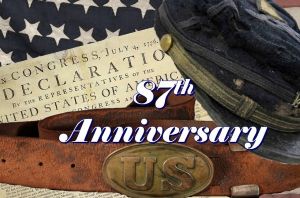
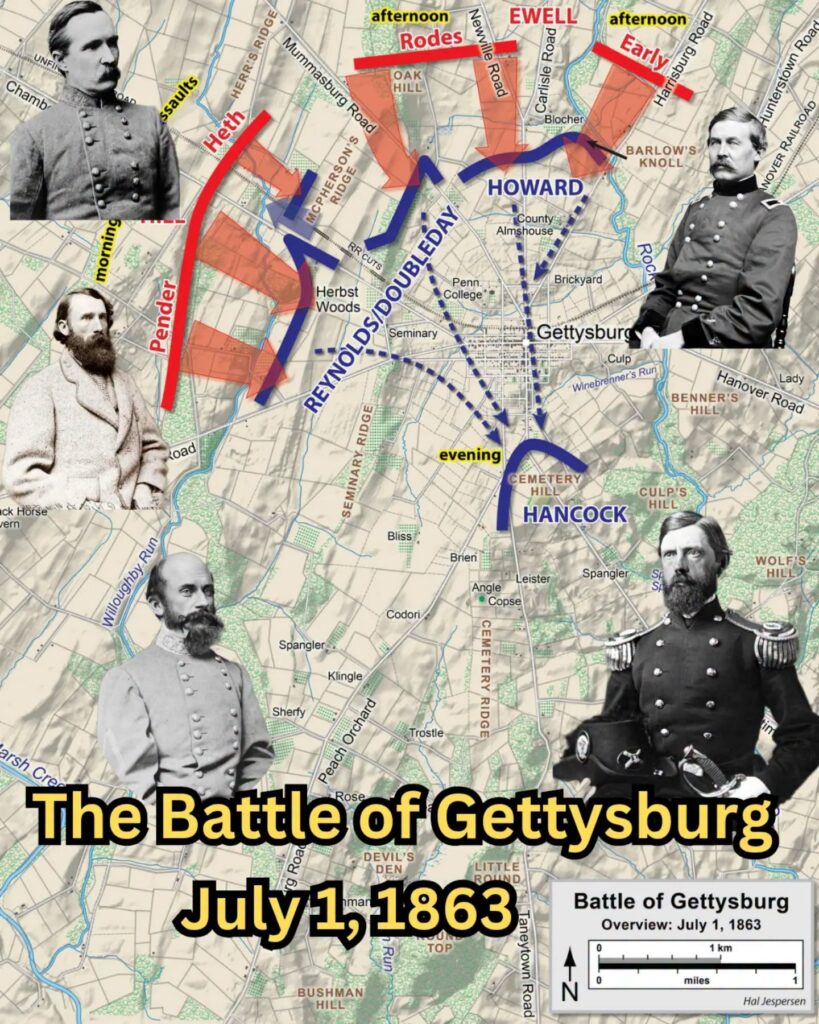
John Berkley observed the 87th Independence Day anniversary from the saddle of a horse. The 21-year-old Berkley served as a wagoner for the Union Army. He had just survived the bloodiest battle of the Civil War; the Battle of Gettysburg.
The historic battle began on July 1, 1863. It was the confederate (southern) state’s general Robert E. Lee’s second invasion of the northern states. The confederate army forced the union army into Gettysburg, Pennsylvania. On the second day of the battle, the union army formed a defensive formation and held their ground. The third day of fighting yielded similar results to the second day. On July fourth, the confederate army retreated from the northern states. Total casualties from the three-day battle exceeded 50,000.
In the southern theater, the confederate surrendered to the union army at the battle of Vicksburg, Mississippi on July 4th. The union army’s two decisive battle victories provided them with the momentum that set them on a path to winning the war and preserving the union.
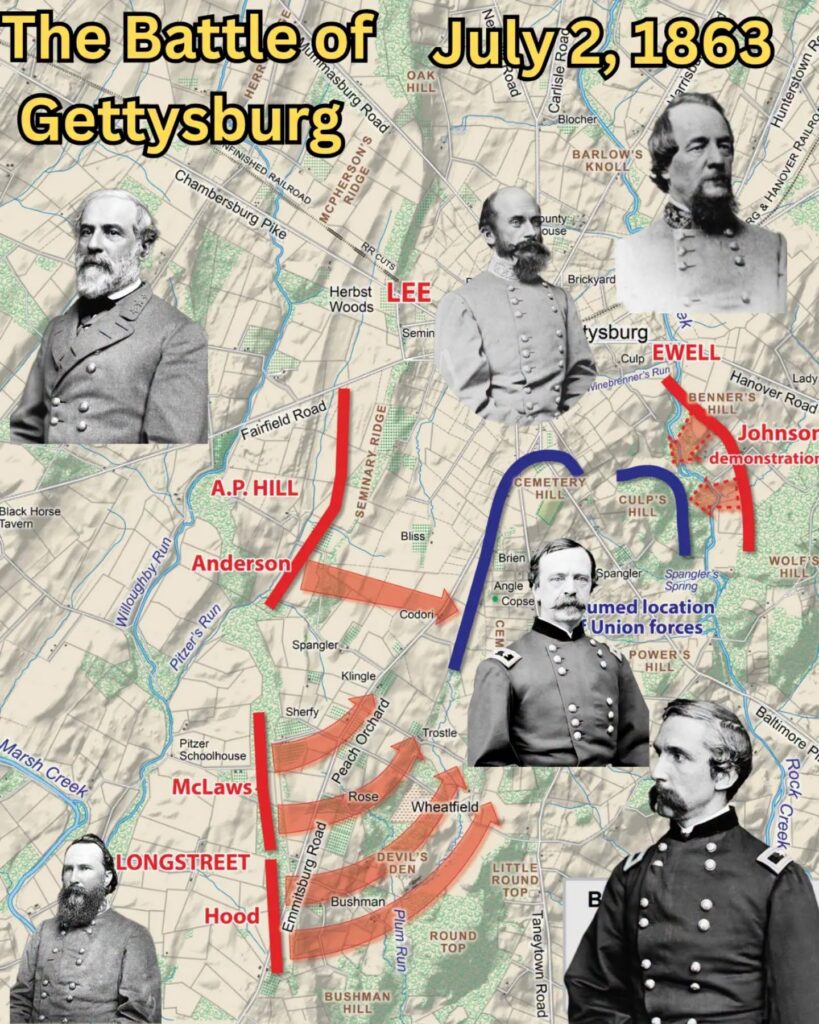
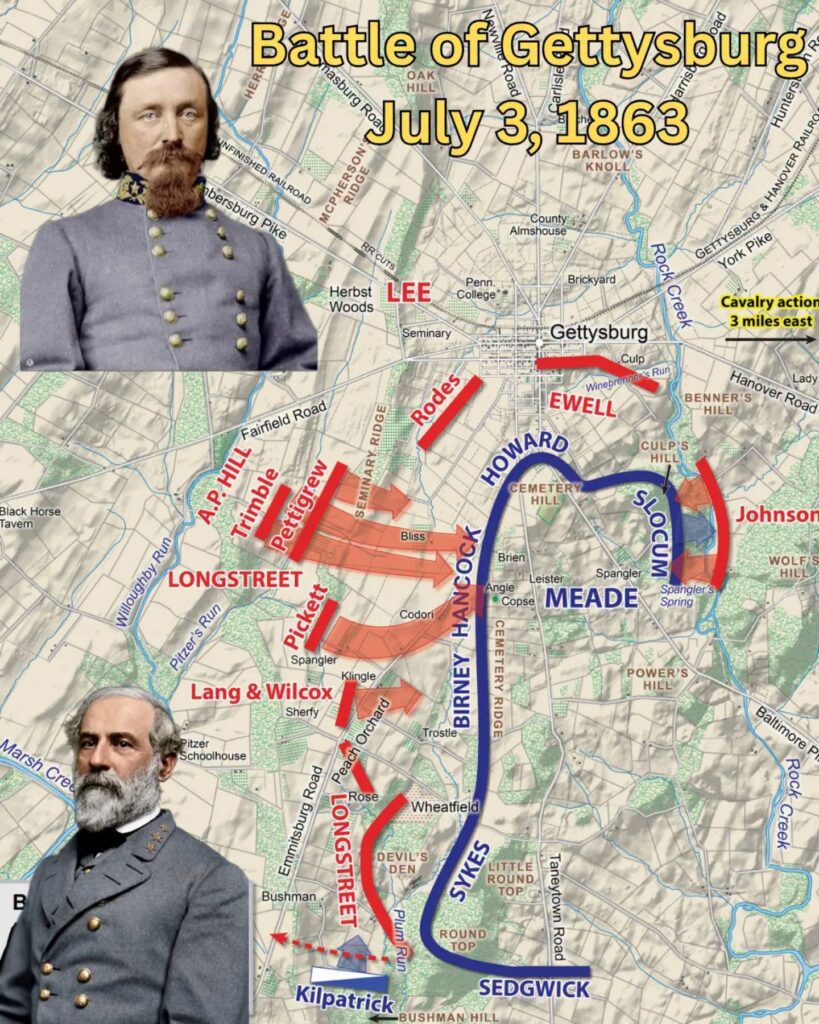
The son of German immigrants, John was born in Baltimore, Maryland. His formative years were spent in the Baltimore area.
In 1863, he entered the service of the union army as a wagoner with the Army of the Potomac Headquarters Quartermaster Train. They moved material for the entire army – not a specific corp.
General John Pershing is credited with the quote, “ Logistics wins wars.” During the Civil War nearly all tactical materials movement was accomplished by horse-drawn wagons. Teams of four or six mules pulled the wagons. Although the capacity of a 6-mule team was 4,000 pounds, the Army of the Potomac loaded their wagons to 2,400 pounds due to road conditions. They operated over 3,000 wagons.
The wagons were called Uncle Sam’s Chariots by the soldiers. A Philadelphia, Pennsylvania company produced most of the wagons. As the war grew, the need for more wagons grew. Manufacturers in other states produced wagons to help meet the demand. They were simple and tailored for logistical support. Each one included a toolbox, feed trough (for the mule team), water bucket, (axle) grease pot and canvas cover. The cost for a wagon and team was $900.
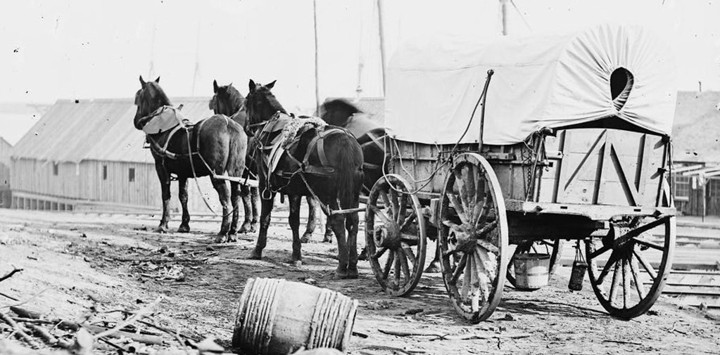
Wagoners drove the team from the left rear mule. This made braking a challenge. With no mechanical brake, the team had to slow the wagon. Attempts to add brakes to the wagons were not successful. Wagoners, also called teamsters, were selected from regiments’ rosters. In addition to driving their team, they cared for their teams, loaded and unloaded the wagons. Wagoners/teamsters earned $13-14 per month.
To augment, civilian contractor teamsters were also used. They were paid $30 per month. Civilian contractors served as wagon masters. They directed the wagoners and maintained the equipment.
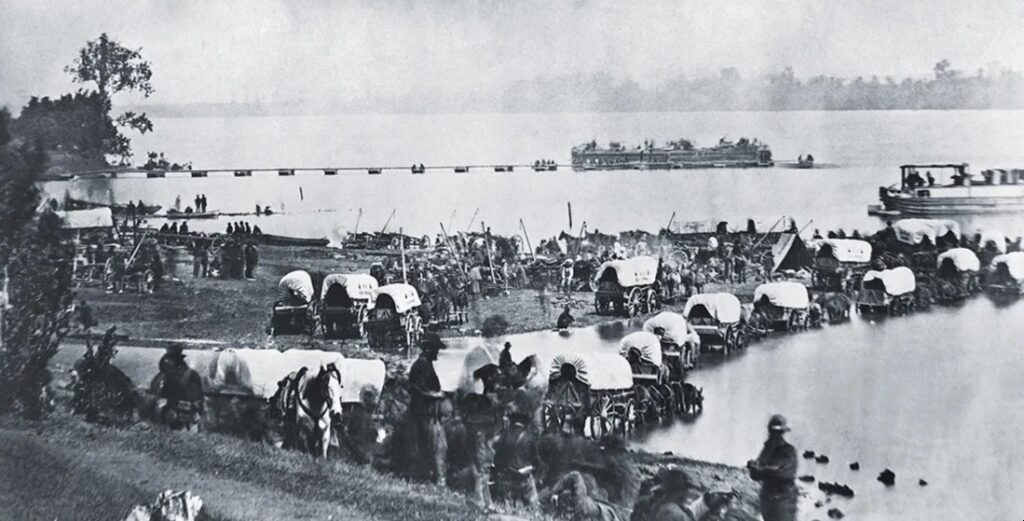
Military records for wagoners were not maintained by their regiments. They were detached from their regiments to serve as wagoners. This explains the lack of John on a regiment’s roster. His military service is only documented by reference in newspaper articles.
After the Battle of Gettysburg, some of the Maryland volunteers joined the Third Maryland Calvary. It was commanded by Colonel Charles Carroll Tevis. The article below was likely written by David S. Showman, who served in the Third Maryland Calvary. After the war Showman relocated to Ellsworth, Kansas in 1874. By Showman’s recollection of John Berkley (in the article), we conclude that John Berkley was in the Third Maryland Calvary, following the Battle of Gettysburg.
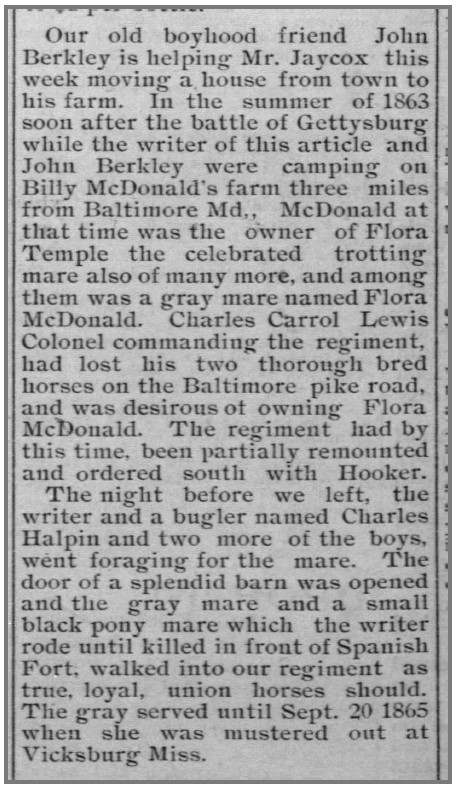
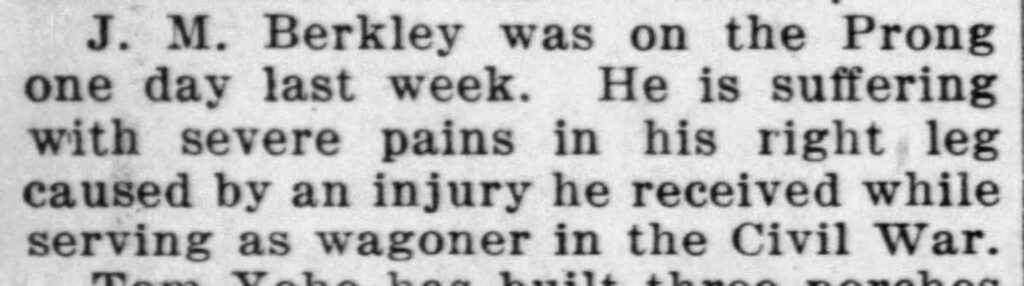
It appears that he was injured during the war, but there is no evidence of a military pension. A couple of his Army buddies hired an attorney to help them apply for pensions.
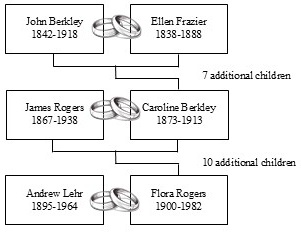
He likely mustered out of the Union Army in September 1865 at Vicksburg, Mississippi. He made his way back to Baltimore Maryland and married Ellen Louise Frazer on November 14th.
Ellen was the daughter of Irish immigrants and was an orphan by 1859 at the age of 21. The 1860 United States Census indicates that Ellen lived with her sister, Martha (Frazer) Gephart and her family. Michael Berkley was also listed as a resident in the same household.
Note: 1860 census records were collected by United States Marshals. They visited each house and personally interviewed a “responsible” person in the house. A responsible person was typically a member of the family residing in the house or a neighbor. Information provided to the enumerator was the best recollection of the responsible person. The census information is only as accurate as the responsible person’s recollection. In this case, John Michael Berkley is listed as Michael Berkley.
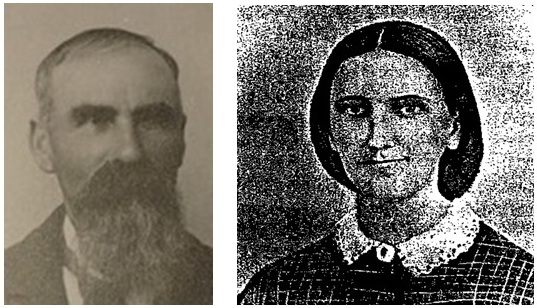
Ellen Louise (Frazer) Berkley 1 Mar 1838 – 6 Dec 1888

Ellen’s nephew, Allen Frazer, was killed while warning a traveler to avoid tampering with an unexploded ordinate from the Battle of Gettysburg in November of 1863. The ordinate exploded and killed the fourteen-year-old nephew. It is likely that John learned of the tragedy from Ellen. Allen Frazer’s story is provided in the following tracks post:
Thirteen Steps from the Battlefield
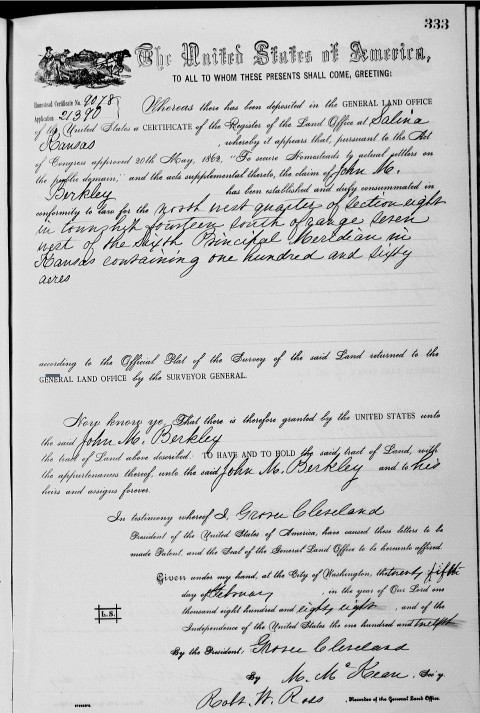
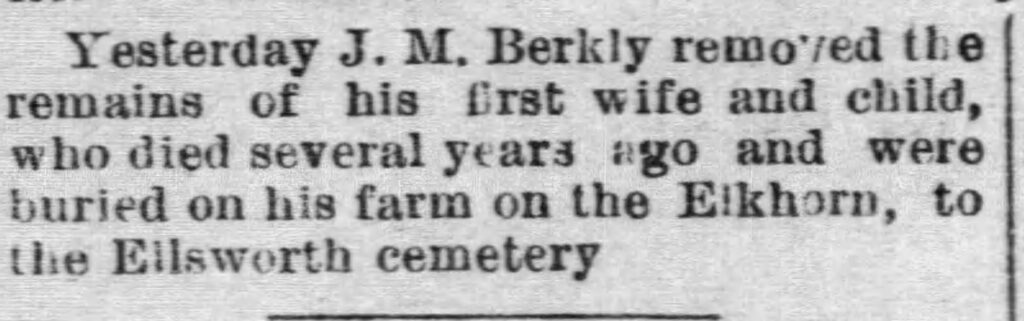
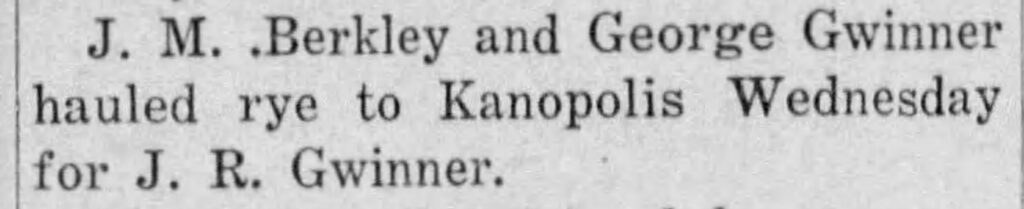
John and Ellen settled in Baltimore, Maryland, where two of their eight children were born. The youngest only lived seven months and died in 1868. Deciding to take advantage of the Homestead Act of 1862, the family headed west. They settled in Ellsworth County, Kansas around 1868. Specifically, Elkhorn Township in Ellsworth. While we don’t know what attracted them to Ellsworth County, it is documented that some of their relatives followed them. Also, some of John’s army buddies joined them in Ellsworth County.
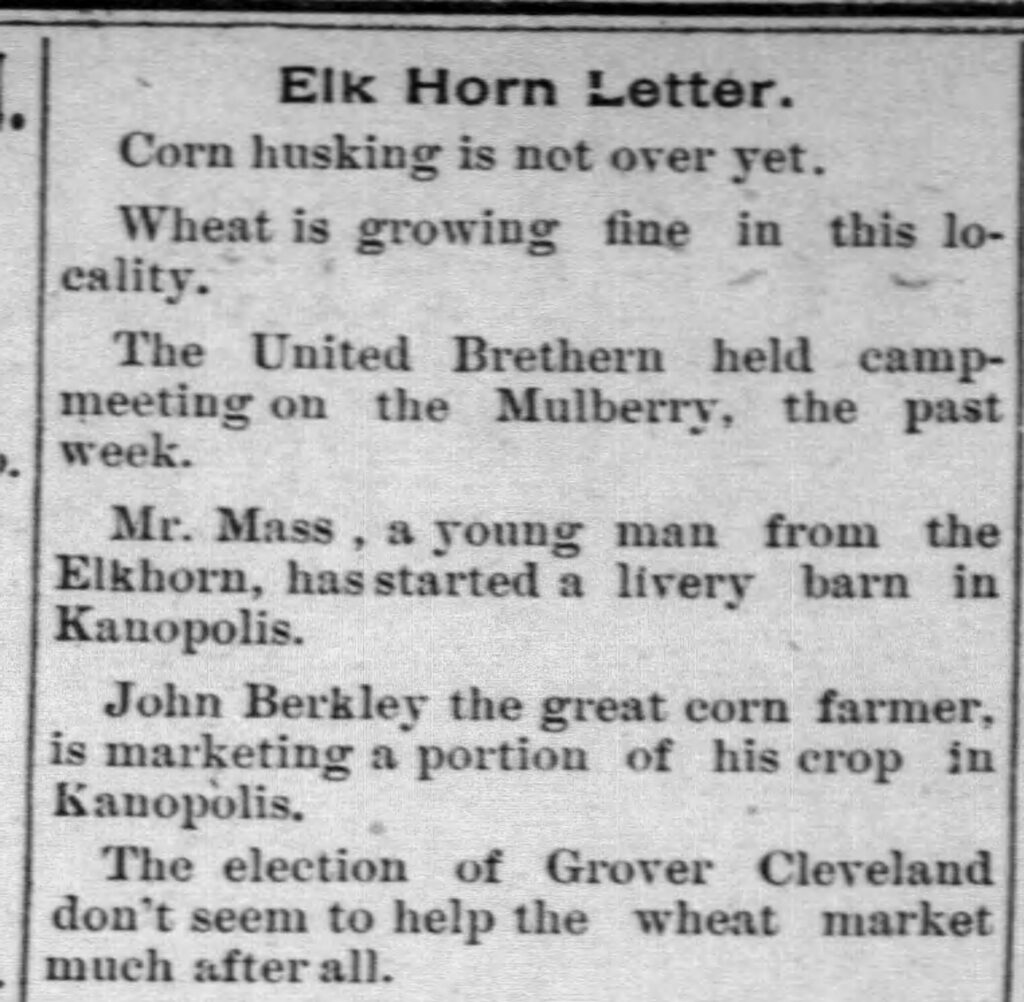
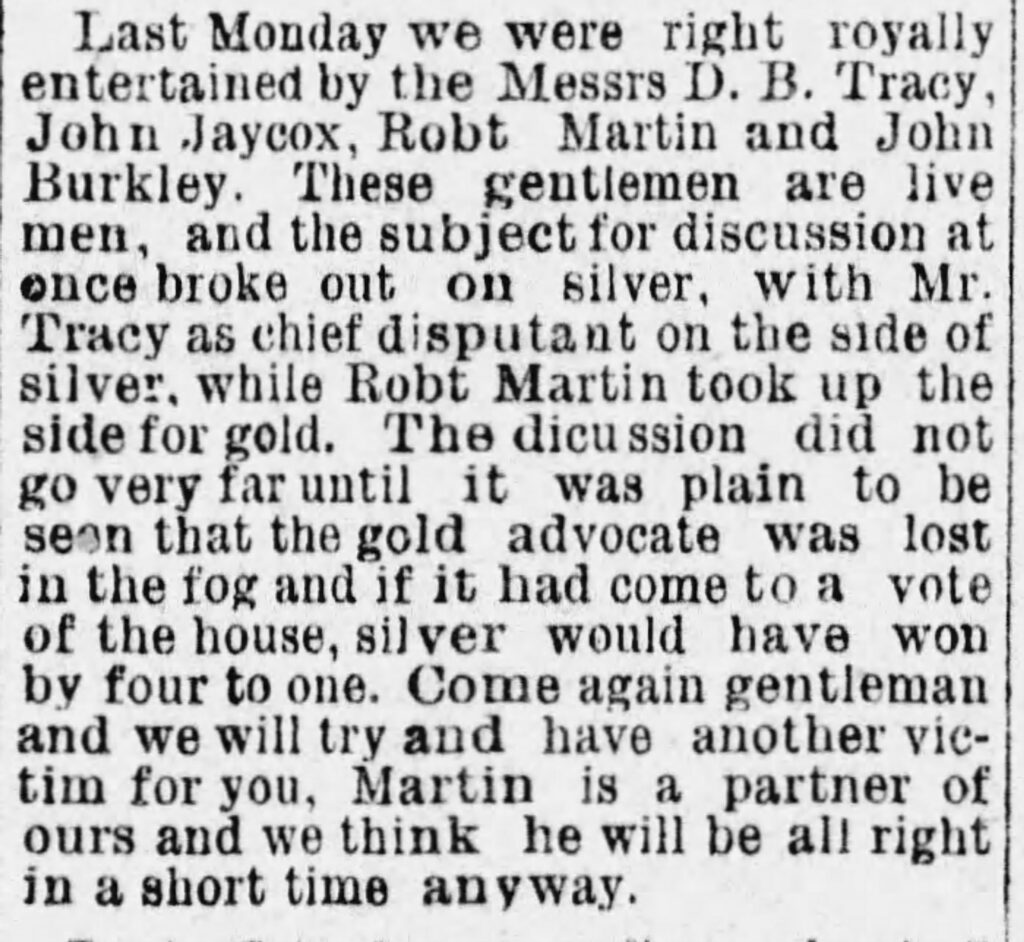
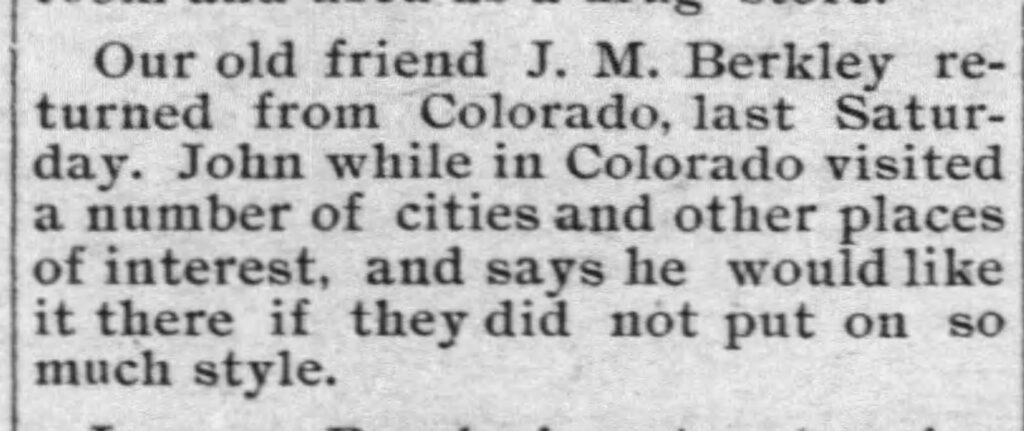
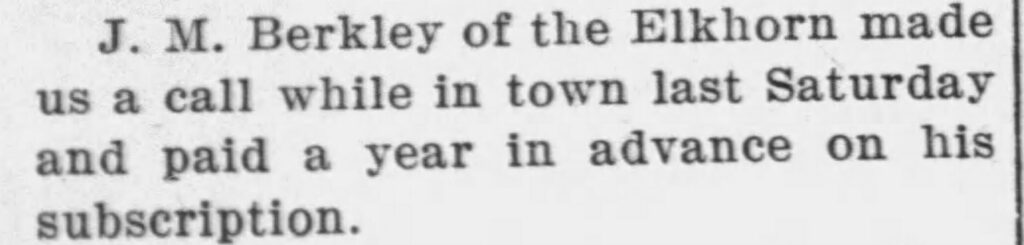
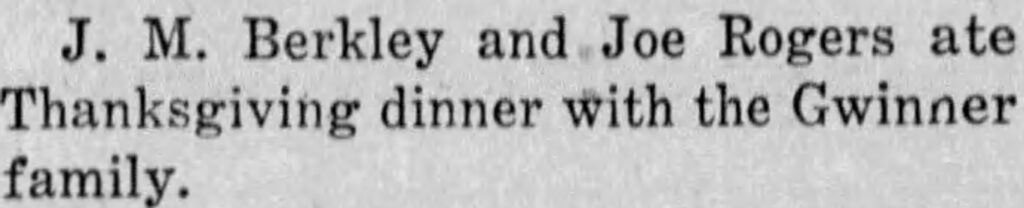
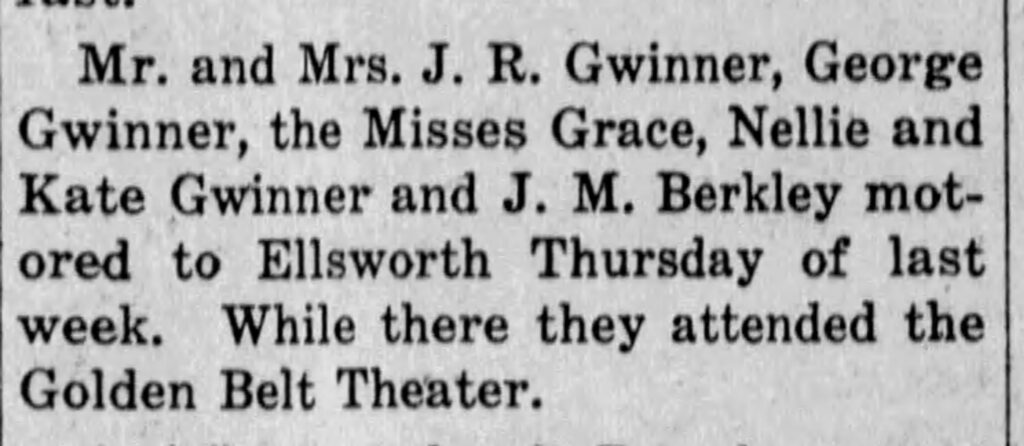
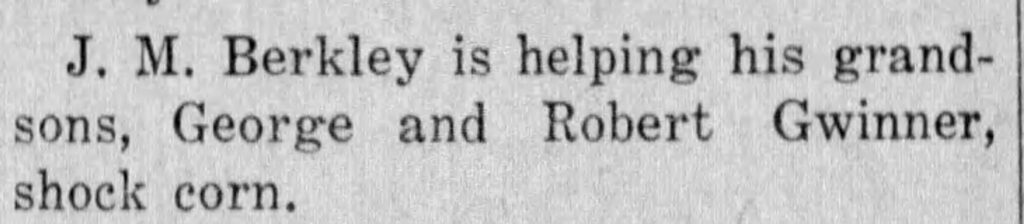
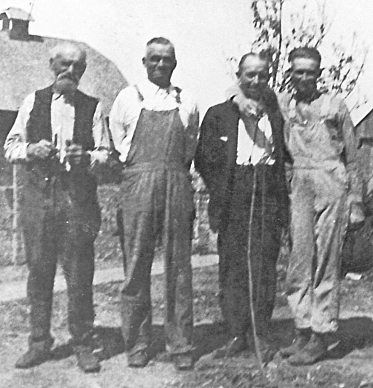
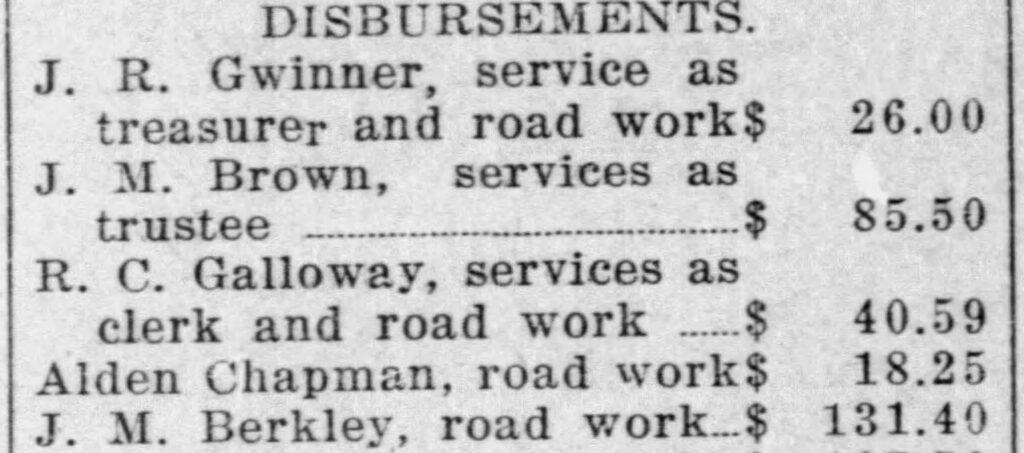
They lived in a few different locations within the county and became active in their communities. They participated in fairs, dances and numerous social activities as documented in the articles below.
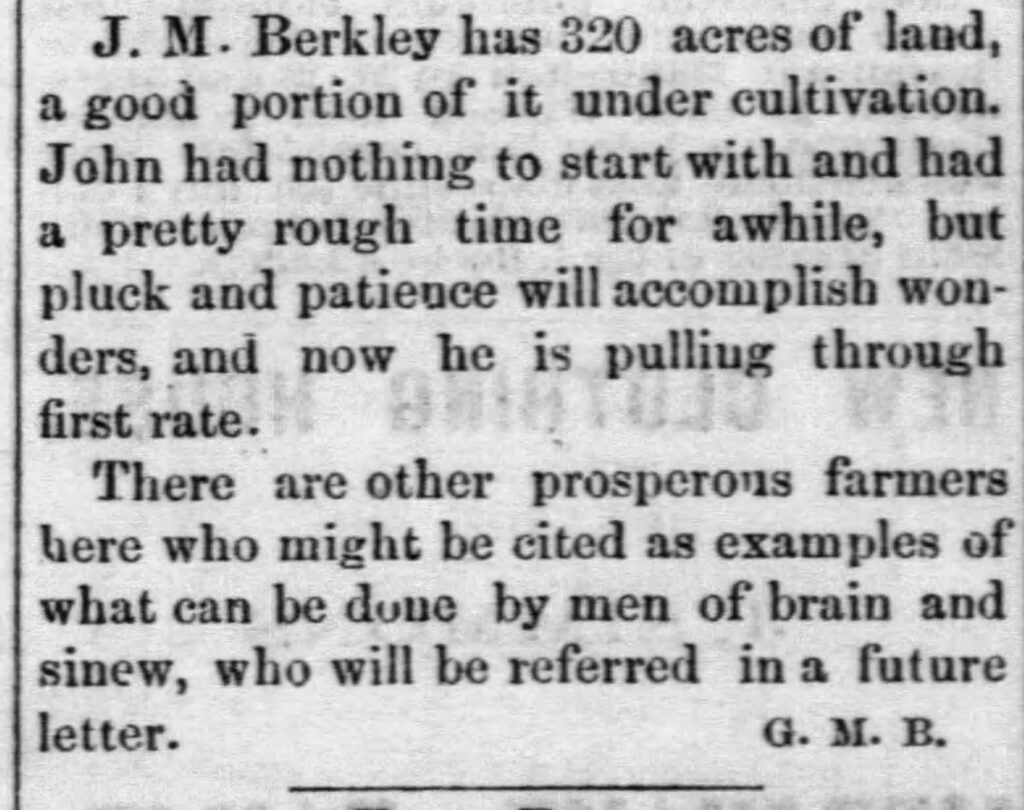
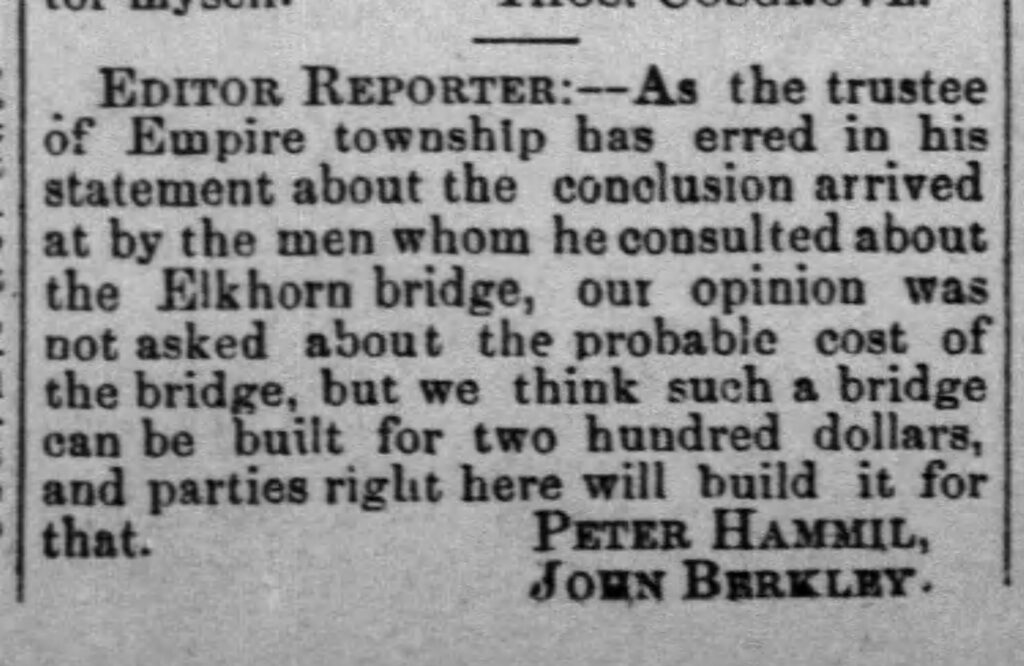
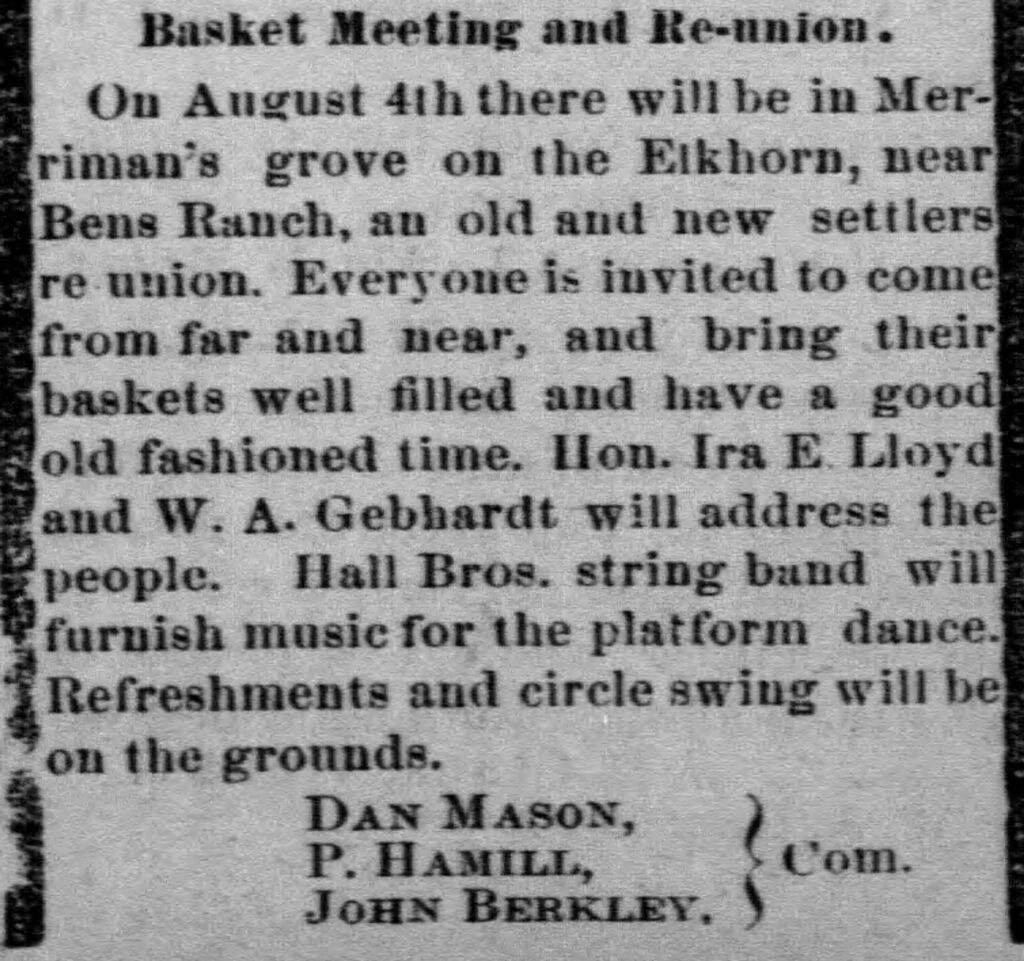
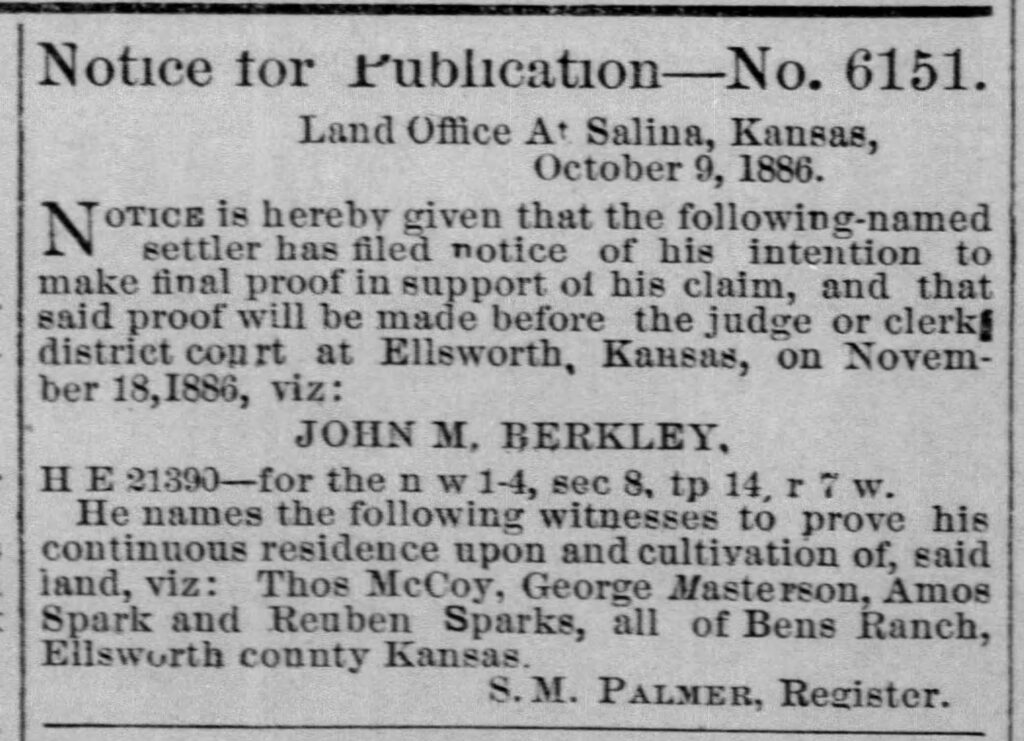
The family had grown to seven by 1880. An infant son died at six months, in 1868. On December 6, 1888, at the age of 50, Ellen passed away after a brief illness that swept through the Elkhorn community.


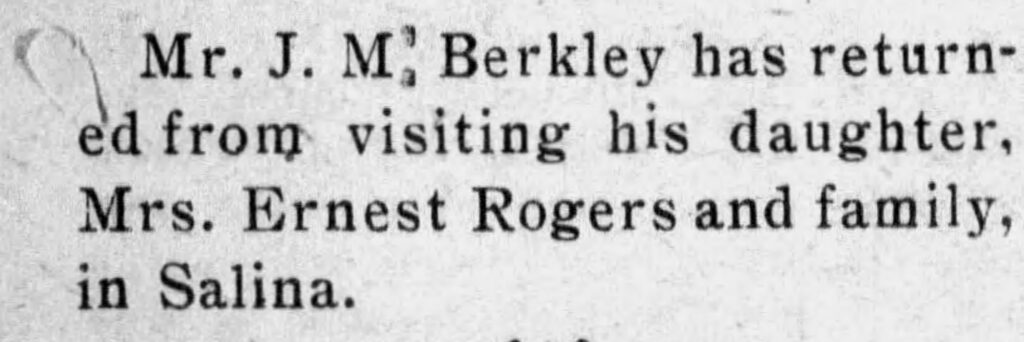
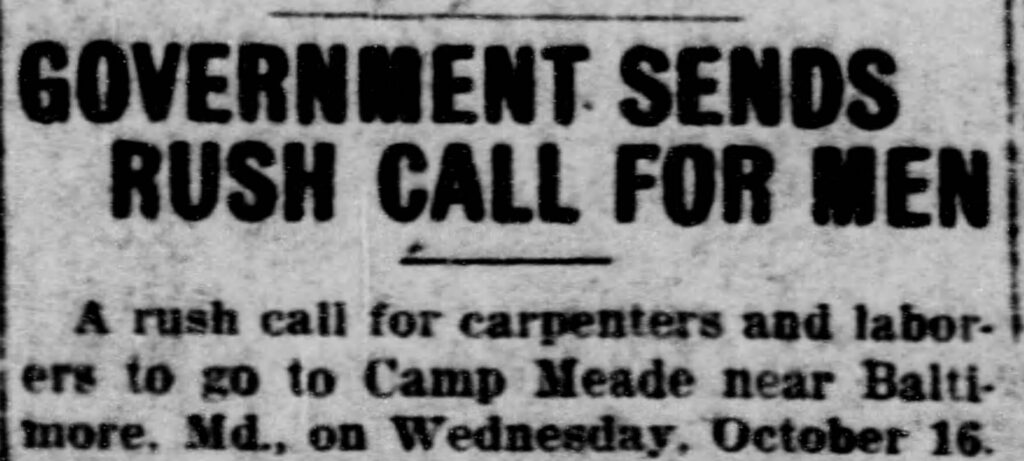
The Spanish Flu began in March of 1918 at Fort Riley, Kansas. That is about 92 miles east of Ellsworth, Kansas. World War I was nearing its end as a call for workers at Camp Meade was issued. At the age of 76, John Berkley made the trip to Camp Meade, Maryland. He was hired as a gatekeeper at a shipyard. After being in Maryland for eight days, he died of paralysis.
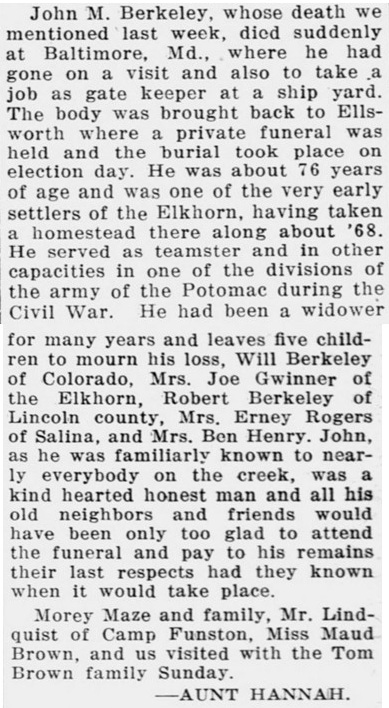
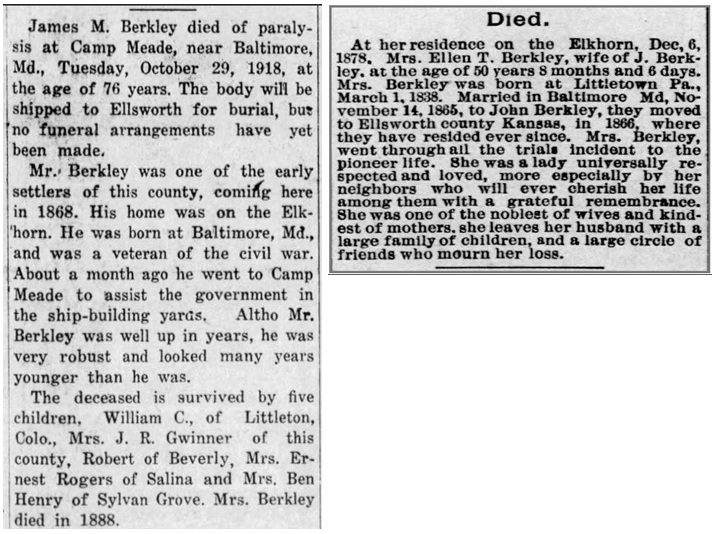
Ellsworth Reporter December 13, 1888
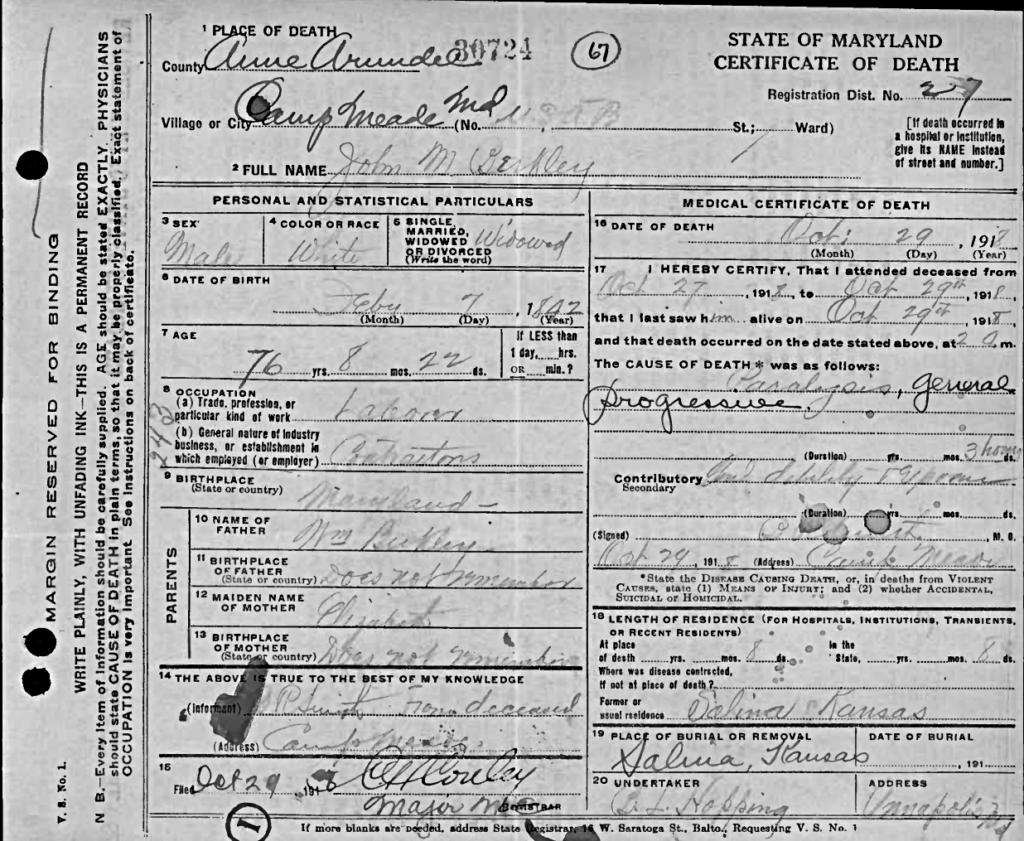
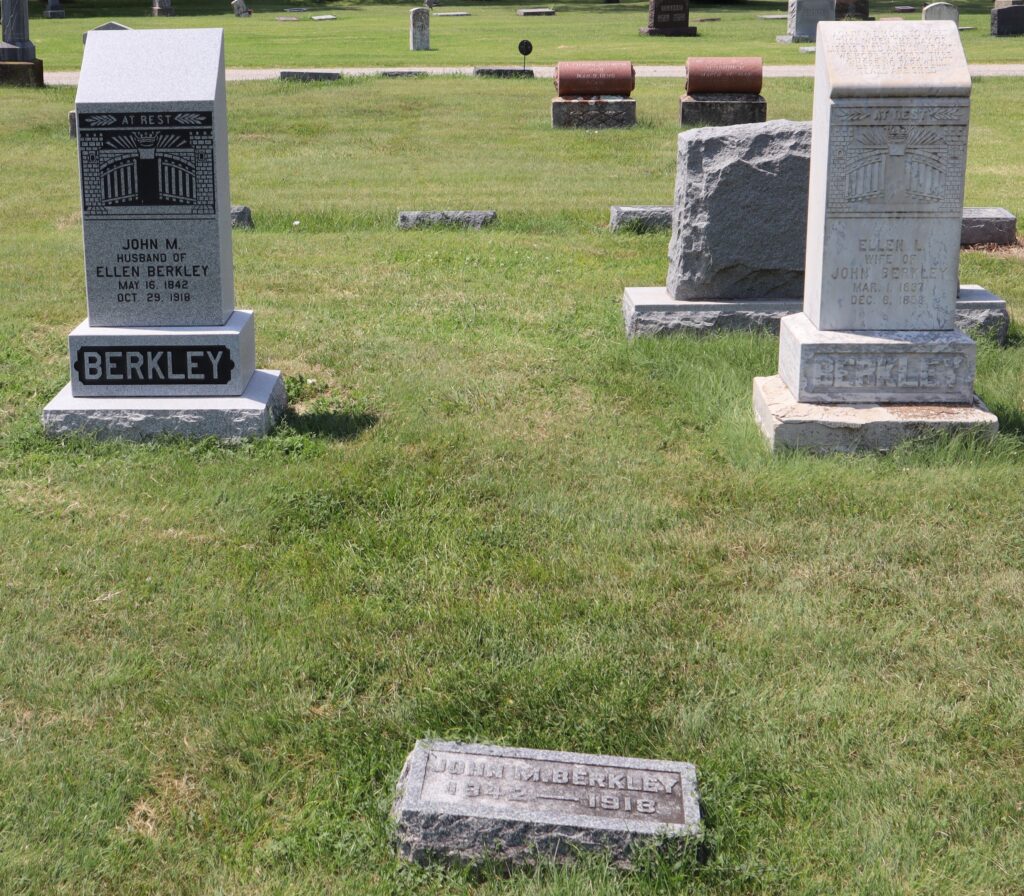
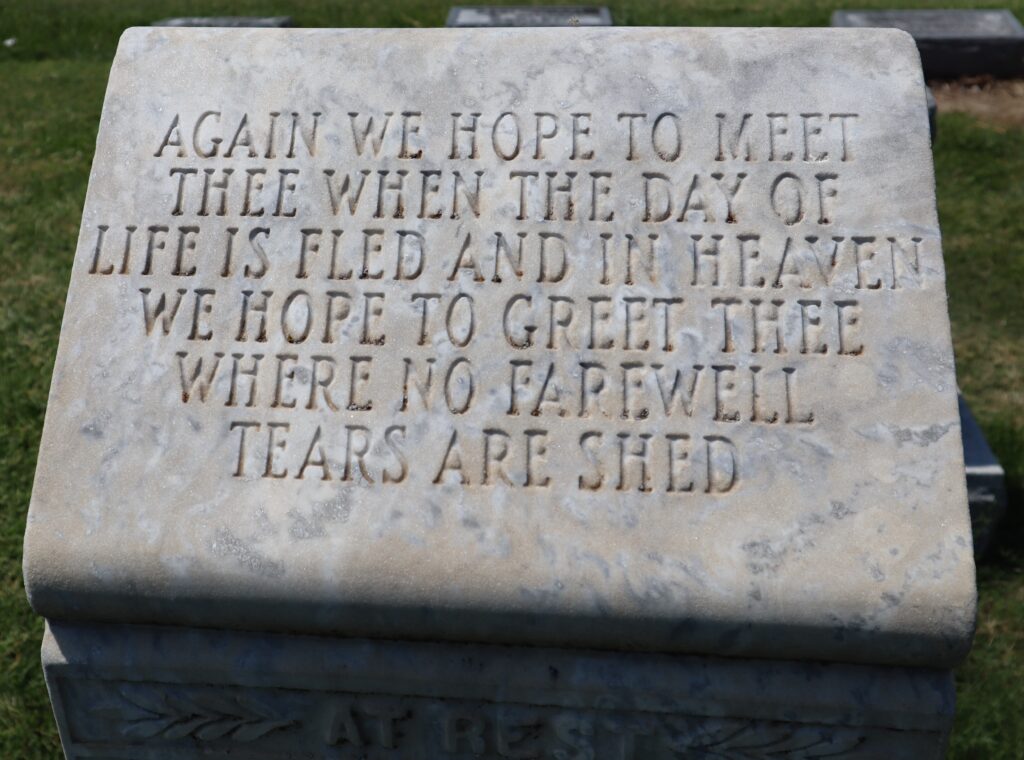
It the course of researching this post, we learned of a bed and breakfast cottage that is located near the property once owned by John Berkley.
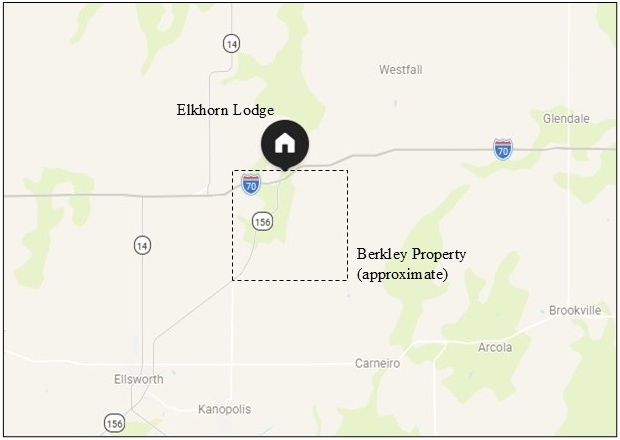
Elkhorn Lodge
125 21st Road
Ellsworth, Kansas
S04, T14, R07W, ACRES 37.2, FR NW4 BEG; AT THE S 16TH CORNER OF NW4, TH; N1175.79′, SE403.65′, SW928′(S) TO THE S; LINE OF NW4, W71.33′ TO POB AND FR NW4
Berkley Property
Kansas, Ellsworth County, 6th Meridian, T14S, R007W, NW1/4, Section 8
Resources
Student of the American Civil War
Civil War Logistics, Dr. Earl J. Hess
Newspapers.com