Military History of Richard Andrew Lehr Jr. Ricky / Rick Story
By Andrew Joseph Lehr Andy / Drew, great grandson*
*Relation to Andy and Flora Lehr.
I would like to start by introducing myself. My name is Andrew Joseph Lehr. Also known as Andy or Drew, I am the oldest child of Richard Andrew Lehr Jr. also known as Ricky or Rick and Diana Mauren (Wilmore) (Lehr) Fendley. Additionally, I am the oldest grandchild of Richard Andrew Lehr Sr. also known as Dick and Evelyn Maxine (Whitlow) Lehr also known as Max along with my English grandparents Roy Wilmore and Doris Mauren (Hargreaves) Wilmore. With all of this out of the way this makes me the oldest or the elder of my generation on both sides of my family line. A cool but strange place to be, but I like it.
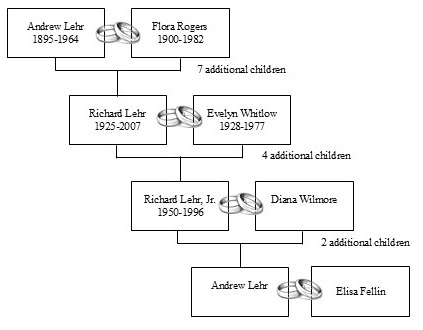
I along with my wife Elisa (Fellin) Lehr, also known as Lisa. We currently live in Baton Rouge, Louisiana where she and I were born. I know some of the names provided seem long but I am including all of the family last names along with birth and marriage changes in addition to nicknames given over the years.
Roger Eaton has asked me to put together a history of Rick’s military service. His active-duty service in the military was a fairly short run lasting roughly two years. So, I will try and give as much insight as I can. Now we don’t have a lot of the individual details, Rick did tell some stories here and there along with Diana. So along with the help of some Army archive paperwork, hopefully for those that may be interested the written information provided along with pictures should give a clue into what his experience was like during his time in the Army. In addition, I am including some personal connecting stories.
Rick is a part of a deep and varied part of my family’s military history which stretches through multiple family lines.
Starting on the American side with my great grandfather, Andrew Joseph Lehr (Andy), during WWI European campaign combat veteran. My grandfather, Richard Andrew Lehr, Sr. (Dick), Pacific campaign WWII combat veteran. My father, Richard Andrew Lehr, Jr. (Ricky/Rick), Vietnam non-combat veteran. Me, Andrew Joseph Lehr (Andy/Drew), Desert Storm Iraq non-combat veteran.

Then on my English side, Great great grandfather, Norman Oscar Hargreaves, Boer war Africa combat veteran. Great great grandfather, William Henry Wilmore, Boer war Africa combat veteran. Great grandfather, Joseph Hargreaves, WWI Europe combat veteran. Great grandfather, Albert Wilmore, WWI Europe combat veteran. And finally, my grandfather Roy Wilmore, WWII North Africa/Italy combat veteran.
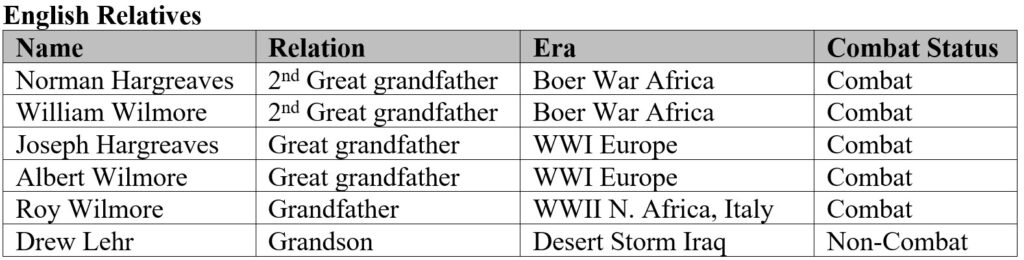
It’s pretty amazing that nine oldest sons all served in the military in one form or another in one family line. As before I am listing nicknames and changes. Joseph, Albert and Roy had no middle names. This is common in English Celtic culture.
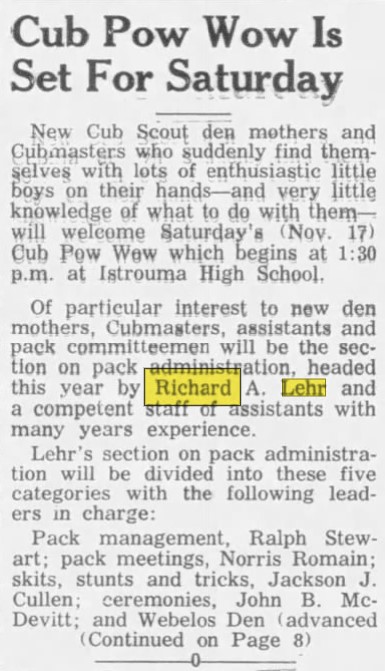
Now to start Rick’s military service story, we are going to have to go back a bit to his junior high and high school years. Ricky, during his Junior high school period started Cub Scouts and excelled quite well. This experience led him to continue into Boy Scouts and finally becoming an Eagle Scout. Becoming an Eagle in the Boy Scouts is the pinnacle of scouting and he accomplished this just before he graduated from high school. Other than pictures I can’t really tell much more about his time in the scouts, he never really talked about it too much.
This is just a personal story. There was a time when I had just started junior high myself that Rick talked to me about starting in scouts. I personally had no interest, at first, but became intrigued the more that he talked about the activities and the learning experiences that come with scouting. Unfortunately, the reality of the contemporary cost of getting into scouting set in and shut the whole idea down. Rick was pretty devastated and somewhat ashamed and I naturally felt bad for him, in the fact that his father was able to provide the experience for him but he could not do the same for his own son. I had realized this during this time and was even prepared for the fact that more than likely scouting was not going to happen for me and Rick. No offense to my parents, but they were poor as mice. The household income just could not justify the expenses.
Later, at the beginning of my sophomore year of high school I started junior R.O.T.C., Reserve Officer Training Corps. By my senior year I achieved the rank of first lieutenant, becoming the only three-year student to make the rank of an officer in the school’s history. So, I guess this was my scouting substitute and my version of being an Eagle. Rick was always very happy that I decided to go into R.O.T.C. and was especially proud when I was promoted to first lieutenant. Then, as the best bonus that he never saw: two of his grandsons became Eagle Scouts; Benjamin Paul Arceneaux (Ben) and Blake Andrew Arceneaux.
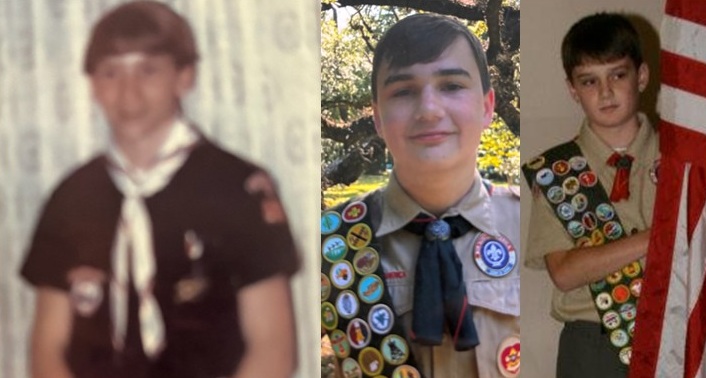
The reason I am mentioning Rick’s scouting experience is that I believe that it greatly contributed to how well he did when the time came for him to serve in the military.
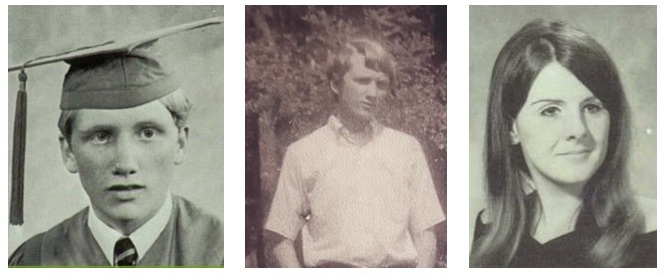
So, let’s step back into 1969 after Rick had graduated from Broadmoor High School in Baton Rouge, Louisiana. He and my mother, Diana, were dating and he had started college at Northwestern State University in Natchitoches, Louisiana. To put this simply, he was young and on top of the world. Then on April the 18th of 1970 Rick and Diana were married. On June the 26th of 1970, I, Andrew Joseph Lehr, was born.
Now let’s keep in mind the fact that the country had gone through the baby boom resulting in Rick and my mother, Diana, as well. This in turn, helped to start the sexual revolution. Which pretty much resulted in my birth. Then on top of this, the county is going through other major cultural changes including an anti-war movement about Vietnam. Then this happens, Rick receives a draft letter around November of 1970.

Yeah, so we have to pause for a moment. The shock to Rick and the rest of the Lehr and Wilmore family extension was quite upsetting. Everyone knew that it was a possibility, but when the event hits directly at a family it is a pretty hard blow. Rick was understandably very upset receiving the news and at first privately told Diana that he was thinking of fleeing to Canada with Diana and his newborn son. This was a common reaction during this era, due to the anti-war stance with a lot of his generation during this time. Diana on the other hand became quite upset, maybe based on her own family’s military service and gave Rick a very stern warning.
“If you do this, when you come back, I will not be here!”
That’s a harsh comment coming from your wife who has a newborn child.
Rick quickly came to his senses and did what he was obligated to do and proceeded with his military requirements. Rick’s induction was I believe on the 10th of November in 1970 starting at the old MEPS (Military Entrance Processing Station). This facility had been around since sometime around WWI. It had a capacity to process 150 inductees per day. When the time came for me to enter the service on the 22nd of May 1989, I went through this same facility. I was going to write a small story piece about its history but unfortunately there is very little information about the complex which was located in the upper Ninth Ward of New Orleans, Louisiana at the corner of the Intercoastal Canal and the Mississippi river helping to lead to it being destroyed during Hurricanes Katrina and Rita. This combined with its military operation may have led to the lack of its history being told. It was replaced by a brand-new location at Belle Chase on the west bank of New Orleans, Louisiana. From here Rick would have received his running orders and within a couple of weeks made the bus ride from Baton Rouge, Louisiana to Fort Polk, Louisiana just outside of Leesville, Louisiana to start Army basic training.
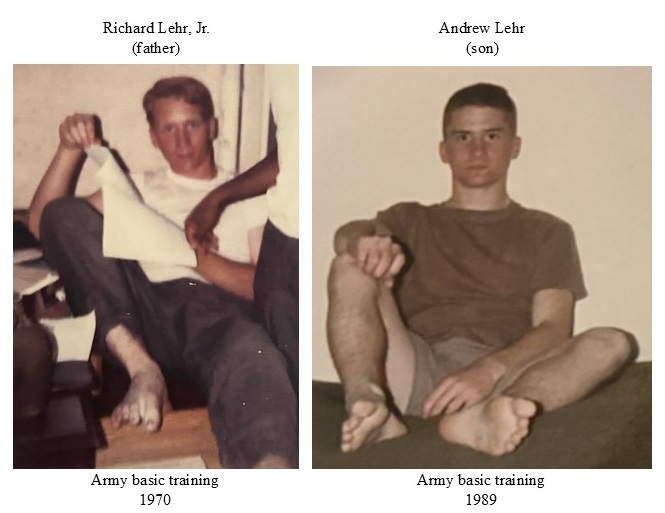
Now let’s get to Fort Polk. Its history starts back in 1941 and is named after Confederate general Leonidas Polk. The purpose of its being established is directly the result of America entering WWII. It occupied a large portion of the middle of the Kisatchie National Forest located in the middle of the state. During WWII, it was best known for the (Louisiana Maneuver) which was the first large scale practice run of troops and equipment for the lead up to entering the war. Also, it’s said that roughly somewhere around eighty percent of the troops sent to fight in Europe went through Fort Polk before they left for combat. After the end of the war, Fort Polk was greatly reduced in size and has stayed that size to this day. The remaining portion of Kisatchie was restored back to its prior condition. Afterwards the base went through several closures and openings – Including during the Korean War era. By the time Vietnam erupted it was back up and fully operational again which included basic training facilities.
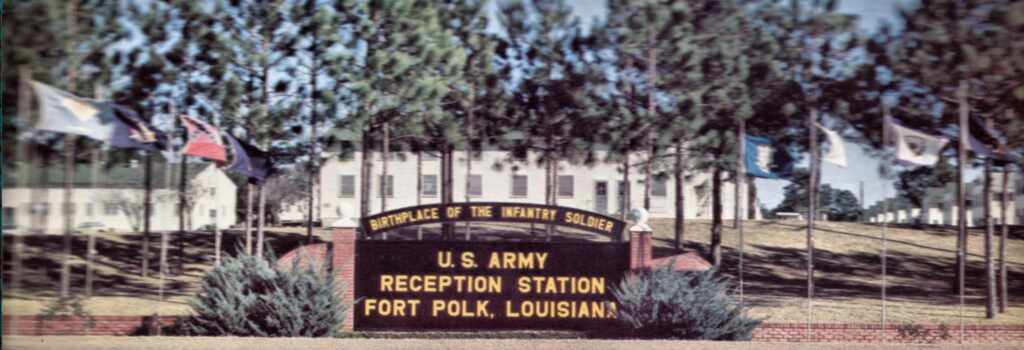
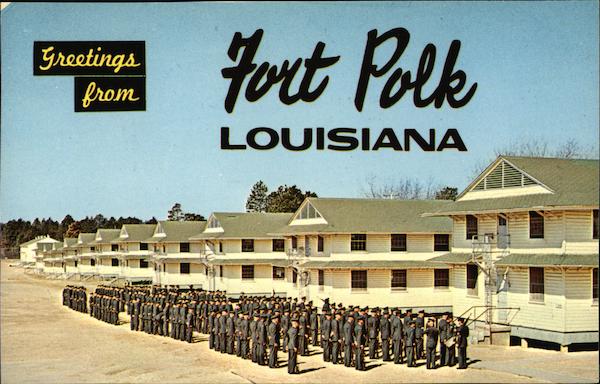
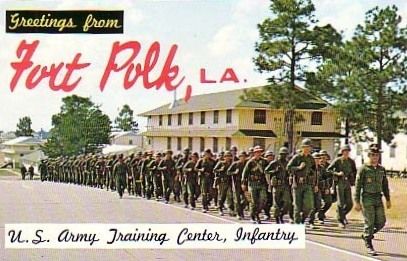
So, Rick now starts, this part is the pretty standard basic training schedule. Break the recruit mentally and physically and then rebuild them into soldiers. Everyone that has served in the military goes through this process. There are only two stories about Rick during basic training that stand out. The first one is kind of funny. While Rick is doing field training the company is told to camouflage their helmets. So Rick, in his normal sarcastic way, finds a very large oak leaf and affixes it to the front of his helmet as if that was all of the camo that was needed. And believe it or not, it was all taken in good humor. Not only did he do what he was told to do but he self-promoted himself to Lt. Colonel as a private. This may have caught the eye of his commanding officer who one day called him into his office. When called in, he asked Rick if after training he wanted to go straight to Vietnam or go to Ranger School. Rick, having his wife and child, decided to go to Ranger school.
Rick before leaving to go to Ranger School, had to go through Tiger Land. Tiger Land was a self-enclosed area where recruits are forced into a survival training experience that is supposed to give the feeling of being in Vietnam and in combat. The name Tiger Land, just like Fort Polk, is itself rooted in civil war history. The Fighting Tigers were from Louisiana made of foreign-born dock workers from New Orleans back then known as “ Tiger Rifles”. The story has a lot to it that we do not need to get into for Rick’s history there. One of the aspects of living in Tiger Land was that you had to live off the land within this space. Huge problem, and I mean one major one, by the time Rick and his company start to go through Tiger Land there is no wildlife left to hunt. Then on top of this, the ground water is undrinkable. It became somewhat common for wives and girlfriends to sneak up to the fence line to bring food and water. Now you have to understand if anyone gets caught doing this there can be huge repercussions. Rick, through the help of his company and Diana, finished the course. Diana has always said that Rick for the rest of his life was never the same after leaving Tiger Land.
If anyone is interested there is a movie called “Tiger Land” it’s not for the faint of heart. I do recommend it because it seems to give the feel of the time and the Tiger Land experience.
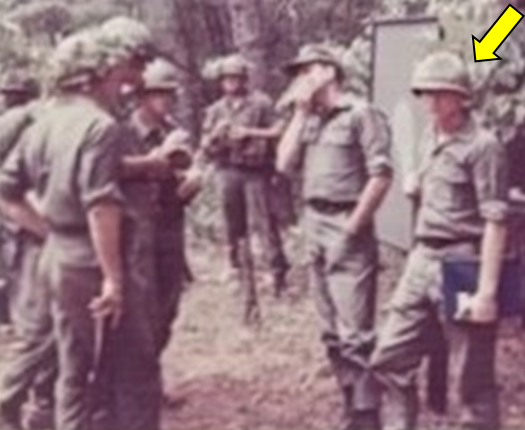
The role of Army Rangers over the years has changed many times. During the Vietnam era the role of a Ranger was to go behind the enemy line and recruit villages that wanted to fight back against the communist and then train the men through a shortened basic guerrilla warfare style basic training. This, as you can imagine, was very dangerous work in a combat zone on many levels.
So, after finishing basic, Rick leaves for Fort Benning, Georgia to enter Ranger Training and I believe Drill Sargent Training as well. During this time, we do not have any information. Diana was able to visit him one time, I believe, but that is it. The only story I ever heard from Rick was that he was fascinated by the fact that there was a firearm library. I know this may sound strange but there was a purpose. The library contained firearms from around the world and this was meant to educate the trainees on what they may find on the battlefield in combat in foreign countries. You were able to check out a firearm as long as you could break it down then reassemble and range qualify it. When I was a child, target practice and fishing were the main father and son moments. Rick was a great shot and a very good teacher. Fishing, well, that’s hit and miss anyway. Although we did do a lot of fishing.
After finishing ranger school and drill sergeant training. Rick was sent back to Fort Polk to assume the role of a drill sergeant. This roughly eight months after he started basic training and he is an E-5 Sargent in rank starting from a buck private. That’s pretty quick progress. Then on the 18th of December 1971, my sister Kimberly Ann (Lehr) Arceneaux (Kim) was born. During this time Rick and Diana had a place on base although very primitive, a single-bedroom trailer. Kim and I spent most of our time living with mostly the Lehr family and sometimes with the Wilmores back in Baton Rouge Louisiana. For the next year Rick continued working as a drill sergeant, even sending new recruits through the nightmare of Tiger Land that he had to endure. By the time 1972 rolls around, the war was almost lost and so on the 9th of November of the same year Rick was discharged from active duty and finally released from inactive reserve duty on the 9th of November 1976. His discharge was Honorable and with no comment, typical Army short and to the point. Just before this happened Rick and Diana’s second daughter Heather Mauren Lehr (Ewing) was born on the 11th of September 1976. As a special note, Heather and Rick were always very close. They shared a special connection. Maxine Lehr, before she passed away after Heather’s birth, had declared to the family that Heather was her replacement. So maybe that had something to do with it.
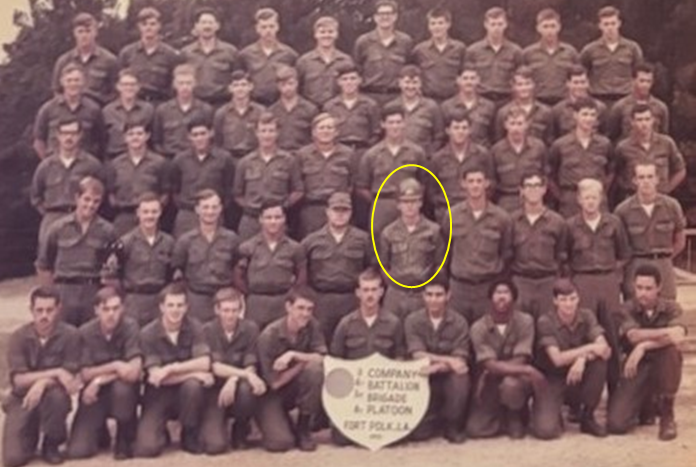
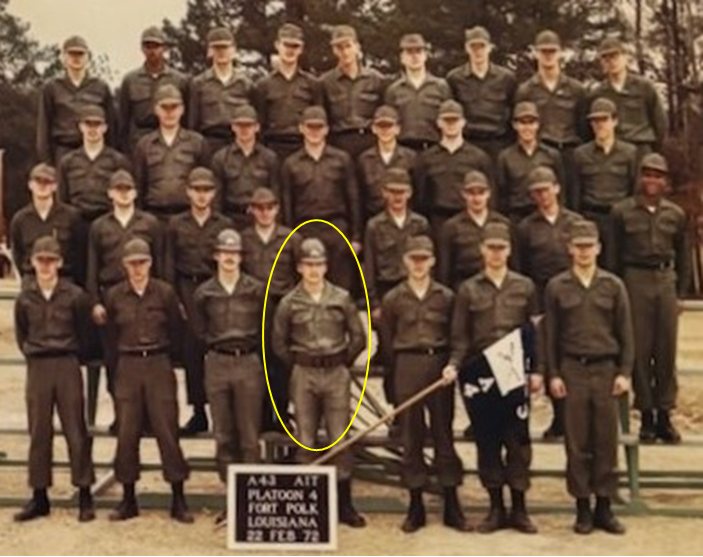
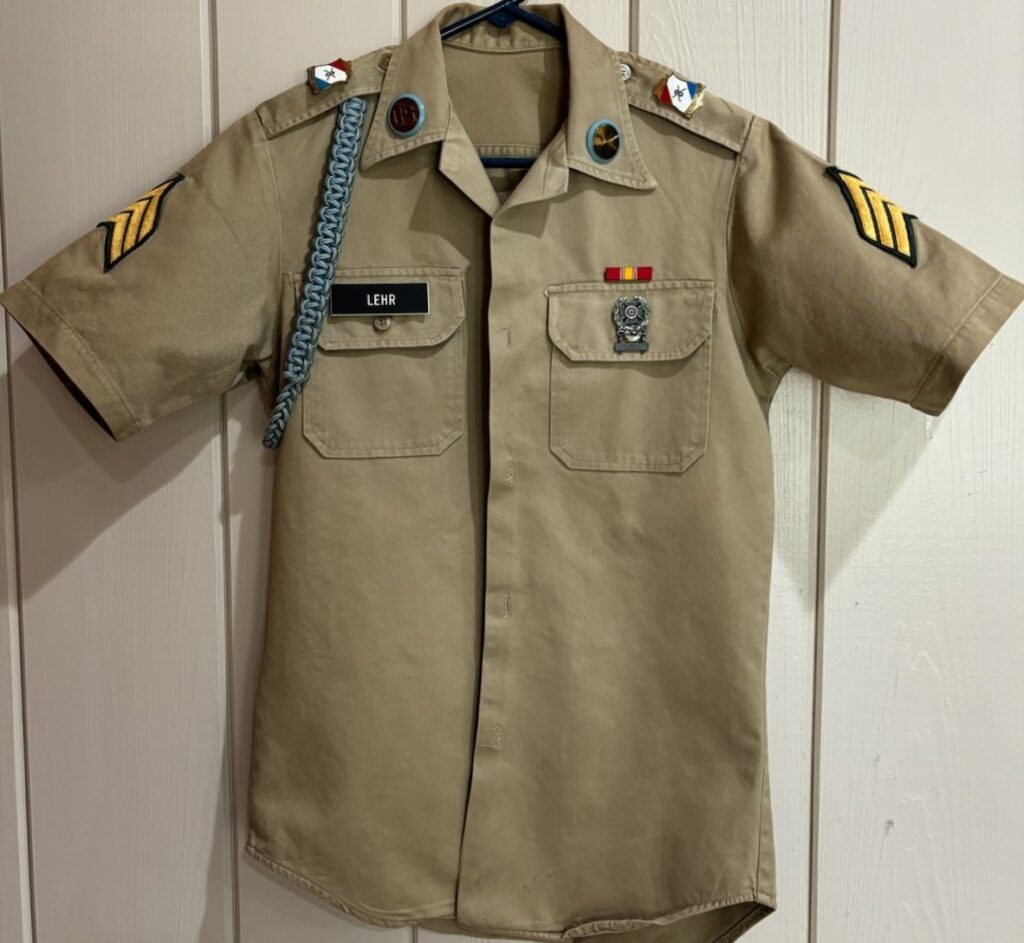
The blue shoulder cord is Fifth Army. “ This color of the cord was used to define which Army Division you were in. By the late 1970’s early 1980’s uniform updates the cords were dropped along with the background color ring on the U.S. and infantry for the collar pins. Rick received the national service ribbon and rifle marksmanship award.
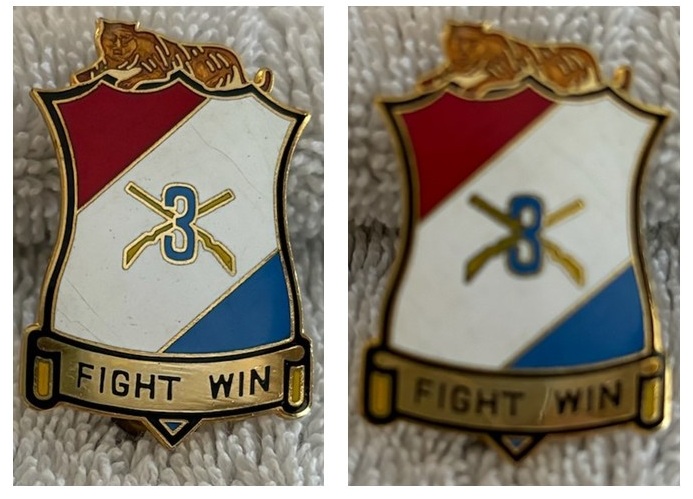
Rick was always very proud that he had served and was always upset about the way that Vietnam combat veterans were treated after the war.
I have three more short personal stories. This first one is about when I left for the services. I was about to be driven to the airport in New Orleans from Baton Rouge when I asked my recruiter to take me to Rick and Diana’s home to say goodbye and he agreed. After talking with Diana, Rick wanted to walk me out to the car. Rick was concerned and proud but more concerned. We shook hands and a good father to son hug. As the recruiter and I drove off, I watched in the rear-view mirror of the car as Rick walked into the middle of the street and he stopped and waved as we were turning the corner, Rick put his head in his hands and walked back to the house. I have no idea what went through his mind other than the concern and maybe the pride that his son was doing this.
The second story is that during Desert Storm being in the National Guard working full time, not the standard one weekend a month and the two weeks during the summer. I decided that I was going to join the regular army full time to go to Iraq. Well, once this news hit the family grapevine, I received two separate phone calls from Dick Lehr and Roy Wilmore. Both of my WWII combat veteran grandfathers told me under no uncertain terms was I allowed to do this, so many generations had fought to make sure that I would never need to. Both of these men had said almost the same words without ever speaking to each other about it. So, needless to say I stayed in my place, how was I to tell them otherwise.
The third and last story is that while working full-time in the Guard I ended up back at Fort Polk during two separate occasions in 1992 and 1993. I was put in charge of a marksmanship yearly qualification program for those years called the Governor’s Twenty. This was a security detail for the state governor made up of best in class enlisted men in the reserve or national guard between the age of thirty-five and forty-five years old. They also had to be married with children oddly enough and with a sound background. This program was not uncommon at the time period, several states used the same system or some form of it. The Governor’s Twenty at the completion of the second year awarded me an honorary Governor’s Twenty patch and an honorary marksman team patch. The Governor’s Twenty Patch is so rare that I can find no information about it.
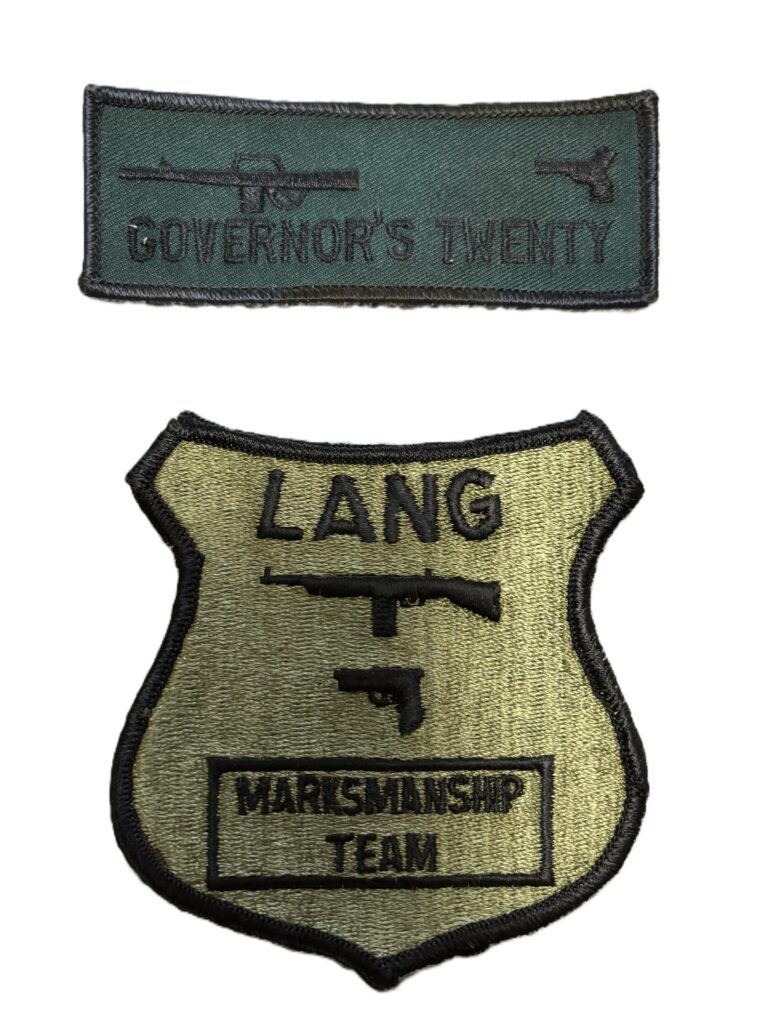
If Rick only knew.
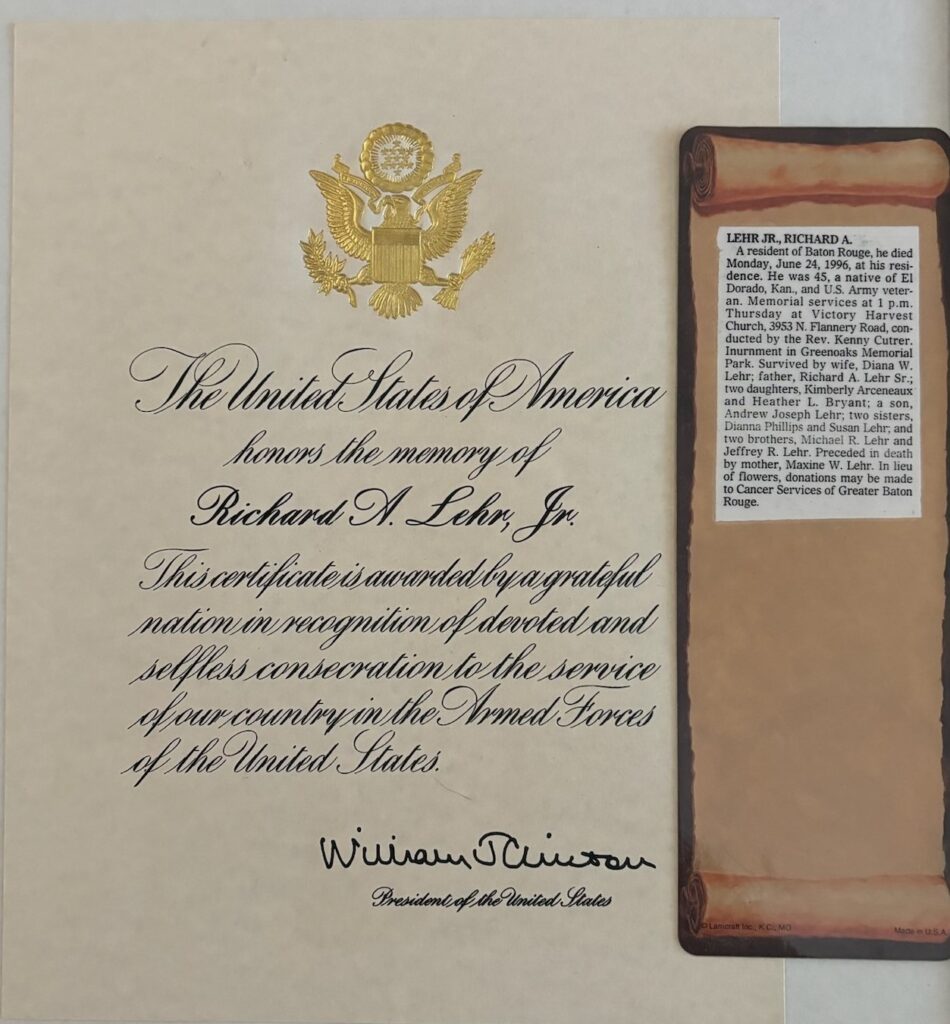
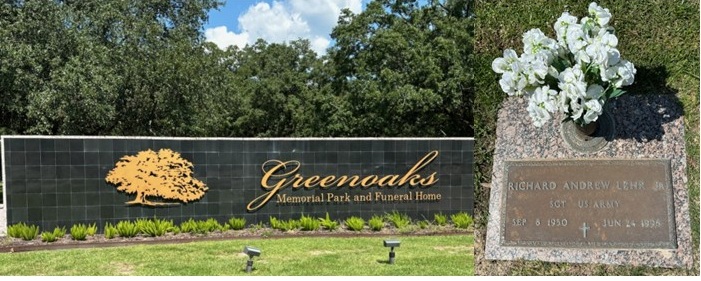
At the age of 46, on the 24th of June 1996, Rick died from throat and mouth cancer.